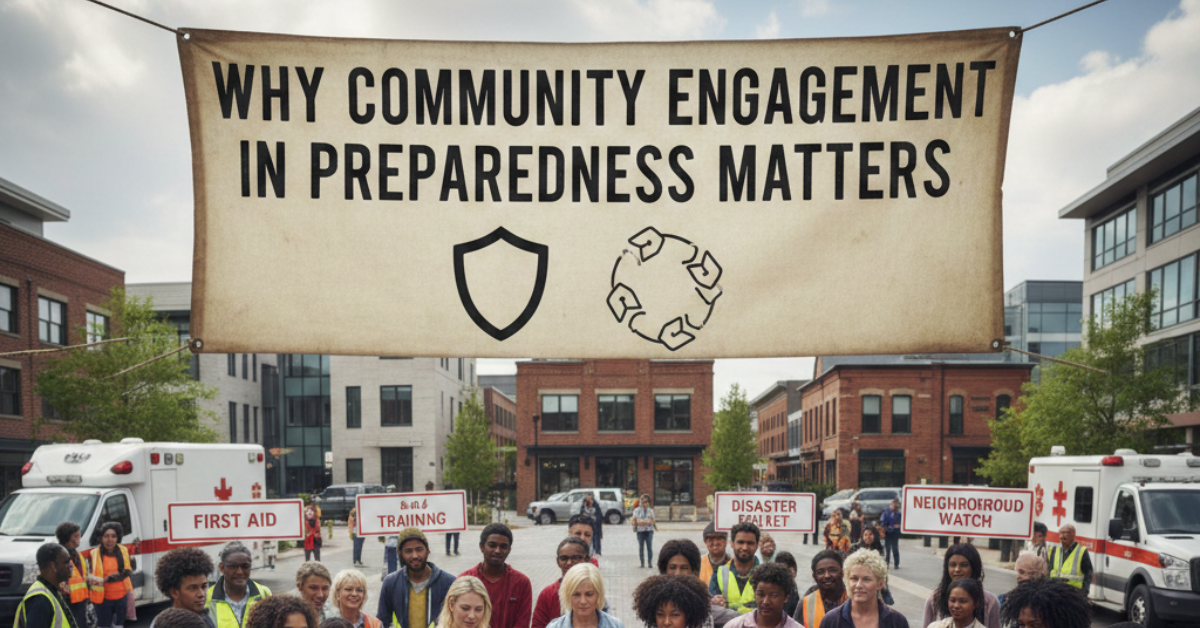
When disaster strikes, it rarely gives a warning that fits neatly into a schedule. Earthquakes, floods, pandemics, power outages—they test more than infrastructure. They test people. That’s exactly why it is important to engage communities in preparedness efforts before a crisis happens, not after.
Preparedness is not just about government agencies and emergency responders. It’s about neighbors knowing each other. It’s about local leaders being trusted. Its about ordinary people having the knowledge and confidence to act. This article breaks down why community engagement in preparedness isn’t optional—it’s essential.
What Does Community Engagement in Preparedness Really Mean?
Community engagement in preparedness refers to actively involving residents, local organizations, businesses, schools, and faith groups in disaster planning, risk reduction, and emergency response activities.
It includes:
-
Public awareness campaigns
-
Emergency drills and simulations
-
Volunteer training programs
-
Risk communication strategies
-
Community-led disaster planning
Organizations like the Federal Emergency Management Agency (FEMA) emphasize that preparedness is most effective when communities—not just institutions—are involved. Similarly, the World Health Organization promotes community-based approaches in health emergencies.
Preparedness works best when it’s shared.
Why Is It Important to Engage Communities in Preparedness Efforts?
Let’s get straight to the point: no emergency system can function at full strength without community participation. Here’s why.
1. Faster and More Effective Disaster Response
When Minutes Matter, Neighbors Matter
Emergency responders cannot be everywhere at once. In large-scale disasters, response times can stretch due to damaged roads, overwhelmed systems, or communication breakdowns.
Engaged communities:
-
Provide immediate assistance before first responders arrive
-
Share real-time information
-
Help identify vulnerable individuals (elderly, disabled, isolated residents)
Community response teams, such as those supported by FEMA’s CERT programs, consistently show that trained local volunteers reduce casualties and chaos.
The bottom line? Prepared communities act first—and that saves lives.
2. Stronger Community Resilience
Preparedness Builds Long-Term Stability
Resilience is the ability to bounce back. But resilience doesn’t appear magically after a crisis. It’s built through:
-
Trust
-
Communication
-
Shared responsibility
-
Local leadership
When people are involved in preparedness planning, they feel ownership. That sense of ownership increases cooperation during recovery efforts.
Research from the United Nations Office for Disaster Risk Reduction consistently highlights community-based disaster risk reduction as a critical factor in reducing long-term economic and social losses.
Communities that plan together recover together.
3. Better Risk Communication and Awareness
Information Is Only Powerful If People Trust It
You can have the best emergency plan in the world. But if the public doesn’t trust the source—or doesn’t understand the message—it fails.
Engaging communities improves:
-
Clarity of messaging
-
Cultural relevance
-
Language accessibility
-
Trust in local authorities
When communication flows both ways—not just top-down—people are more likely to follow evacuation orders, vaccination campaigns, or safety advisories.
Preparedness is not just about information. It’s about trust.
4. Protection of Vulnerable Populations
No One Should Be Left Behind
Every community includes vulnerable groups:
-
Elderly residents
-
Low-income families
-
People with disabilities
-
Migrant populations
-
Individuals without transportation
When communities are engaged, these individuals are identified before a disaster. Support systems can be built in advance.
Preparedness planning that excludes the community often overlooks these groups. Community engagement ensures equity in disaster response.
5. Cost-Effective Disaster Risk Reduction
Let’s be practical: disasters are expensive.
According to global disaster reports, billions are lost annually due to natural and human-made hazards. However, proactive investment in community preparedness significantly reduces long-term recovery costs.
Engaged communities:
-
Reduce strain on emergency services
-
Prevent property damage through early action
-
Strengthen local economic continuity
Prevention and preparedness are always cheaper than rebuilding.
6. Increased Civic Participation and Social Cohesion
Preparedness efforts create more than safety—they build connection.
Community drills, volunteer programs, and preparedness workshops bring people together. That builds:
-
Social networks
-
Volunteerism
-
Local leadership
-
Civic responsibility
Social cohesion directly impacts survival rates and recovery speed during disasters. Studies after major hurricanes and earthquakes show that neighborhoods with strong social ties recover faster than isolated ones.
Preparedness strengthens communities beyond emergencies.
Key Benefits of Engaging Communities in Preparedness Efforts
Here’s a quick summary:
-
Faster emergency response
-
Lower mortality rates
-
Reduced economic loss
-
Stronger local trust
-
Improved communication
-
Greater long-term resilience
If you’re still wondering why it is important to engage communities in preparedness efforts, the answer is simple: systems fail without people.
Practical Ways to Engage Communities in Preparedness
Talking theory is easy. Implementation is harder. Here are actionable strategies:
Host Local Emergency Workshops
Partner with schools, mosques, community centers, and businesses.
Create Community Emergency Response Teams (CERT)
Train volunteers in first aid, fire suppression, and disaster coordination.
Use Social Media and Messaging Apps
Local WhatsApp or SMS alert groups improve real-time communication.
Conduct Annual Drills
Simulations improve muscle memory during real emergencies.
Involve Youth
Preparedness education in schools builds lifelong awareness.
Preparedness should not feel like a government program. It should feel like a shared mission.
The Role of Public Health and Global Health Crises
The COVID-19 pandemic showed the world what happens when communities are not fully engaged in preparedness planning.
Countries and regions that had strong community networks:
-
Distributed supplies faster
-
Shared accurate information
-
Reduced misinformation spread
The pandemic reinforced a powerful lesson: public health preparedness depends on community trust and participation.
FAQs: Why Is It Important to Engage Communities in Preparedness Efforts?
1. What is community preparedness?
Community preparedness refers to organized efforts that involve local residents in disaster planning, emergency response training, and risk reduction activities.
2. Why can’t governments handle preparedness alone?
Governments provide structure and resources, but they cannot replace immediate local action. Communities are always the first responders.
3. How does community engagement reduce disaster impact?
It improves awareness, speeds up response, protects vulnerable groups, and strengthens recovery systems.
4. What are examples of community preparedness programs?
Examples include community emergency response teams (CERT), neighborhood evacuation plans, school emergency drills, and public health awareness campaigns.
5. Is community engagement effective in developing countries?
Yes. In fact, it is often even more critical where infrastructure and institutional capacity may be limited.
Conclusion: Preparedness Is a Shared Responsibility
If you take away one thing, let it be this: preparedness is not a solo effort. It’s collective.
Understanding why it is important to engage communities in preparedness efforts changes how we think about disaster planning. It shifts the focus from reactive response to proactive resilience.
Engaged communities respond faster. Recover stronger. Protect each other better.
If you’re serious about safety—whether at a local, national, or organizational level—start by strengthening community participation. Explore related topics like disaster risk reduction strategies, emergency communication planning, or resilience frameworks to deepen your understanding.
Preparedness is not just about surviving disasters. It’s about building communities that thrive despite them.