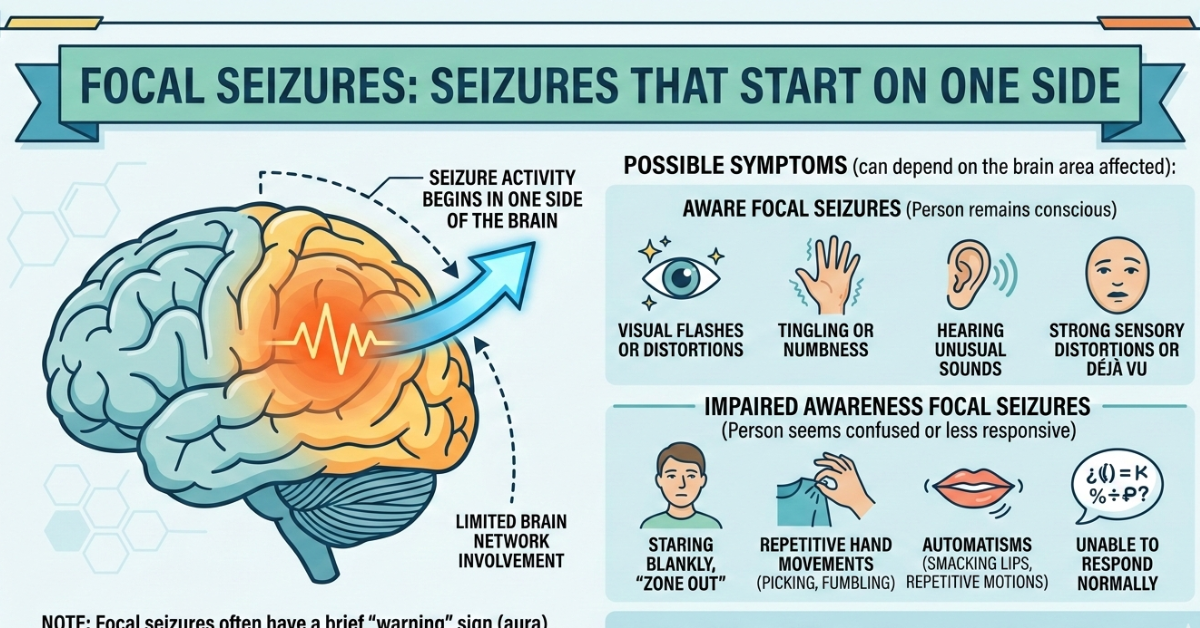
If you’ve ever wondered which type of seizure originates on one side of the brain, the answer is focal seizures (formerly called partial seizures). Unlike seizures that affect the entire brain at once, focal seizures begin in a specific area on one side and may stay localized—or spread to other regions.
Understanding focal seizures matters. Early recognition can improve diagnosis, guide treatment, and help people manage their condition with confidence.
What Are Focal Seizures? (The Main Answer)
Focal seizures start in a single hemisphere (one side) of the brain. They occur when abnormal electrical activity develops in a specific brain region.
Depending on where the seizure begins, symptoms can vary widely—affecting movement, sensation, emotions, or awareness.
Key facts:
-
Begin in one localized brain area
-
May remain localized or spread
-
Can affect awareness or not
-
Common in many forms of epilepsy
Medical organizations like the Epilepsy Foundation classify these seizures based on whether awareness is preserved.
Types of Focal Seizures
1. Focal Aware Seizures (Simple Partial)
In these seizures, the person stays conscious and aware.
Possible symptoms:
-
Sudden jerking of one body part
-
Tingling or unusual sensations
-
Visual changes or flashing lights
-
Intense emotions (fear, déjà vu)
-
Strange smells or tastes
These episodes often last seconds to a minute.
2. Focal Impaired Awareness Seizures (Complex Partial)
Here, awareness is reduced or altered.
Common signs:
-
Staring spells
-
Repetitive movements (lip-smacking, hand rubbing)
-
Confusion after the episode
-
Lack of memory of the event
These typically last 1–2 minutes and may be mistaken for daydreaming or distraction.
When Focal Seizures Spread
Sometimes, a focal seizure spreads from one side to both hemispheres. This is called focal to bilateral tonic-clonic seizure.
Symptoms may progress to:
-
Body stiffening
-
Rhythmic jerking
-
Loss of consciousness
Recognizing early focal symptoms (called an aura) can help predict a larger seizure.
What Causes Focal Seizures?
Focal seizures are linked to abnormal electrical activity triggered by structural or functional changes in the brain.
Common causes include:
-
Head injury or trauma
-
Brain tumors
-
Stroke
-
Brain infections
-
Developmental abnormalities
-
Scarring (temporal lobe epilepsy is common)
In many cases, the exact cause remains unknown.
Symptoms Depend on Brain Location
Because focal seizures start in a specific region, symptoms reflect that area’s function:
| Brain Area | Possible Symptoms |
| Temporal lobe | Déjà vu, emotions, memory changes |
| Frontal lobe | Sudden movements, speech problems |
| Occipital lobe | Visual disturbances |
| Parietal lobe | Tingling, numbness |
This localization helps neurologists diagnose the seizure type accurately.
How Focal Seizures Are Diagnosed
Doctors use a combination of:
-
Medical history and symptom description
-
EEG (electroencephalogram) to detect abnormal activity
-
Brain imaging (MRI or CT scan)
-
Video EEG monitoring in complex cases
Guidelines from organizations like the World Health Organization emphasize early diagnosis to reduce complications and improve quality of life.
Treatment Options
Treatment depends on the cause, frequency, and severity.
Common approaches:
-
Anti-seizure medications (first-line treatment)
-
Surgery (if seizures originate from a removable area)
-
Vagus nerve stimulation (VNS)
-
Responsive neurostimulation
-
Lifestyle management (sleep, stress control, medication adherence)
Many people achieve good seizure control with proper treatment.
When to Seek Medical Help
Get medical evaluation if:
-
A seizure happens for the first time
-
Episodes repeat or worsen
-
Loss of awareness occurs
-
Injury happens during a seizure
Early care makes a significant difference.
FAQs
Q1: Which type of seizure originates on one side of the brain?
Focal seizures originate in one specific area on one side of the brain.
Q2: Can focal seizures turn into generalized seizures?
Yes. They can spread and become bilateral tonic-clonic seizures.
Q3: Are focal seizures dangerous?
They can be manageable, but untreated seizures may increase risks such as injury or progression.
Q4: Do focal seizures always involve loss of consciousness?
No. Many focal seizures occur with full awareness.
Q5: What is an aura?
An aura is the early symptom of a focal seizure, such as a strange smell, feeling, or sensation.
Conclusion
So, if you’re asking which type of seizure originates on one side of the brain, the answer is clear: focal seizures. They begin in a specific brain area, produce symptoms based on location, and may or may not affect awareness.
The good news? With early diagnosis and proper treatment, many people live full, active lives. If you or someone you know experiences unusual episodes, don’t ignore them—seek medical evaluation and explore reliable resources.