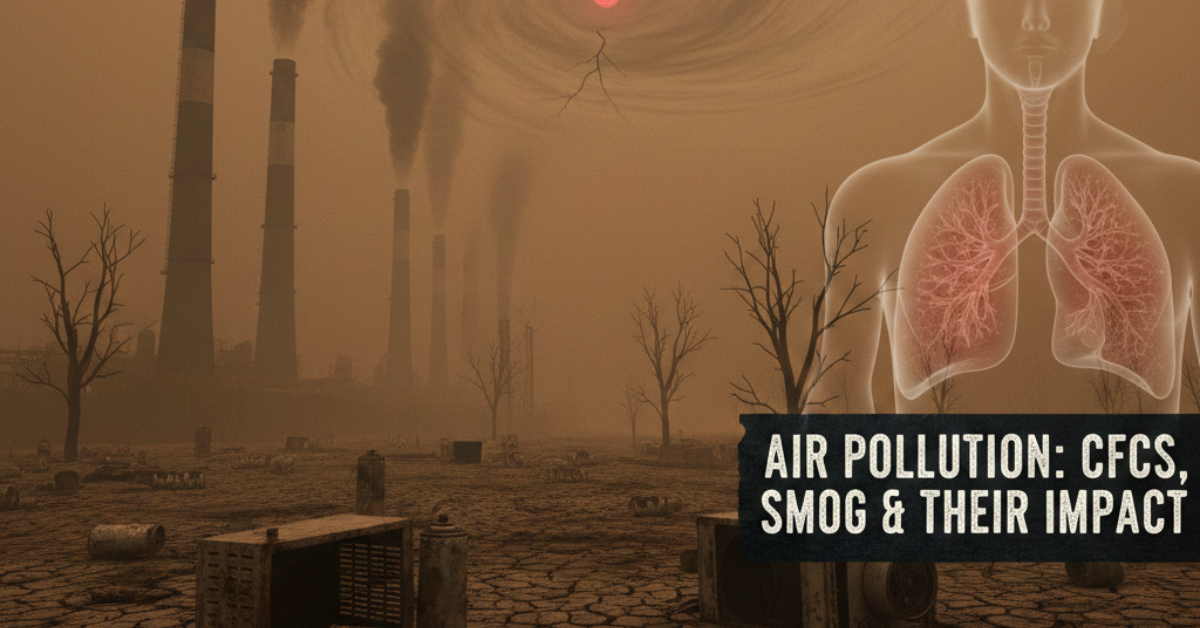
If you’ve ever wondered which type of pollution includes CFCs and smog, the short answer is air pollution. But the full story is more interesting—and more important—than that. From thinning the ozone layer to triggering breathing problems, these pollutants affect both the planet and our daily lives.
In this guide, we’ll break down how CFCs (chlorofluorocarbons) and smog fit into air pollution, where they come from, why they matter, and what can be done about them.
What Is Air Pollution?
Air pollution happens when harmful substances enter the atmosphere and disrupt its natural balance. These pollutants can be:
-
Gases (like CFCs, carbon monoxide, nitrogen oxides)
-
Particles (dust, soot, smoke)
-
Chemical reactions (like those that form smog)
When people ask which type of pollution includes CFCs and smog, the correct category is air pollution, specifically atmospheric pollution.
Understanding CFCs: A Hidden Threat in the Air
What Are CFCs?
Chlorofluorocarbons (CFCs) are man-made chemical compounds once widely used in:
-
Refrigerators and air conditioners
-
Aerosol sprays
-
Foam packaging and insulation
-
Cleaning solvents for electronics
They were popular because they are stable and non-flammable—but that stability turned out to be a problem.
Why CFCs Are Harmful
When released, CFCs rise into the upper atmosphere and break down under UV radiation. This process damages the ozone layer, which protects Earth from harmful ultraviolet rays.
Effects of CFC-related air pollution include:
-
Increased skin cancer risk
-
Eye damage (cataracts)
-
Harm to crops and marine life
-
Contribution to climate change
Smog: The Visible Face of Air Pollution
What Is Smog?
Smog is a thick, hazy layer of air pollution that forms when pollutants react in sunlight. The term comes from a combination of “smoke” and “fog.”
There are two main types:
-
Photochemical smog – caused by vehicle emissions and sunlight
-
Industrial smog – caused by burning coal and industrial fuels
Sources of Smog
-
Vehicle exhaust
-
Factory emissions
-
Power plants
-
Construction dust
-
Burning fossil fuels
Health and Environmental Effects
-
Breathing difficulties and asthma attacks
-
Eye and throat irritation
-
Reduced visibility
-
Damage to plants and crops
How CFCs and Smog Fit Into Air Pollution
Both CFCs and smog fall under air pollution, but they affect the atmosphere differently:
| Pollutant | Type | Main Impact |
| CFCs | Chemical gas pollutant | Ozone depletion, climate effects |
| Smog | Secondary air pollutant (formed by reactions) | Health problems, visibility reduction |
So, if you’re searching which type of pollution includes CFCs and smog, the answer is clearly air pollution, specifically chemical and photochemical atmospheric pollution.
Why Air Pollution Matters More Than Ever
Air pollution isn’t just an environmental issue—it’s a public health crisis. According to global health agencies:
-
Millions of premature deaths each year are linked to poor air quality
-
Urban areas face the highest smog levels
-
Long-term exposure increases risks of heart disease and lung conditions
CFCs have been largely controlled through international agreements, but smog remains a major challenge in growing cities.
What Can Be Done to Reduce Air Pollution?
Individual Actions
-
Use public transport or carpool
-
Reduce energy consumption
-
Avoid aerosol products containing harmful propellants
-
Support clean energy options
Policy and Global Efforts
-
Phasing out ozone-depleting substances
-
Emission standards for vehicles and industries
-
Urban air quality monitoring
-
Investment in renewable energy
FAQs
1. Which type of pollution includes CFCs and smog?
Both are forms of air pollution affecting atmospheric quality and environmental health.
2. Are CFCs still used today?
Most countries have phased them out under global environmental agreements, though some older equipment may still release them.
3. Is smog the same as smoke?
No. Smog is a chemical mixture formed when pollutants react with sunlight, while smoke is a direct emission from burning materials.
4. Which is more dangerous: CFCs or smog?
They cause different problems. CFCs damage the ozone layer globally, while smog directly harms human health locally.
5. How can I check air quality in my area?
Use local air quality indexes (AQI) from environmental agencies or weather apps.
Conclusion
To sum it up, if you’re asking which type of pollution includes CFCs and smog, the answer is air pollution—one of the most pressing environmental challenges today. While CFCs threaten the ozone layer and global climate, smog affects daily health and visibility in cities.
Understanding these pollutants is the first step. The next step? Pay attention to air quality, support cleaner energy, and make small lifestyle changes that add up. Cleaner air isn’t just an environmental goal—it’s a health investment for everyone.