
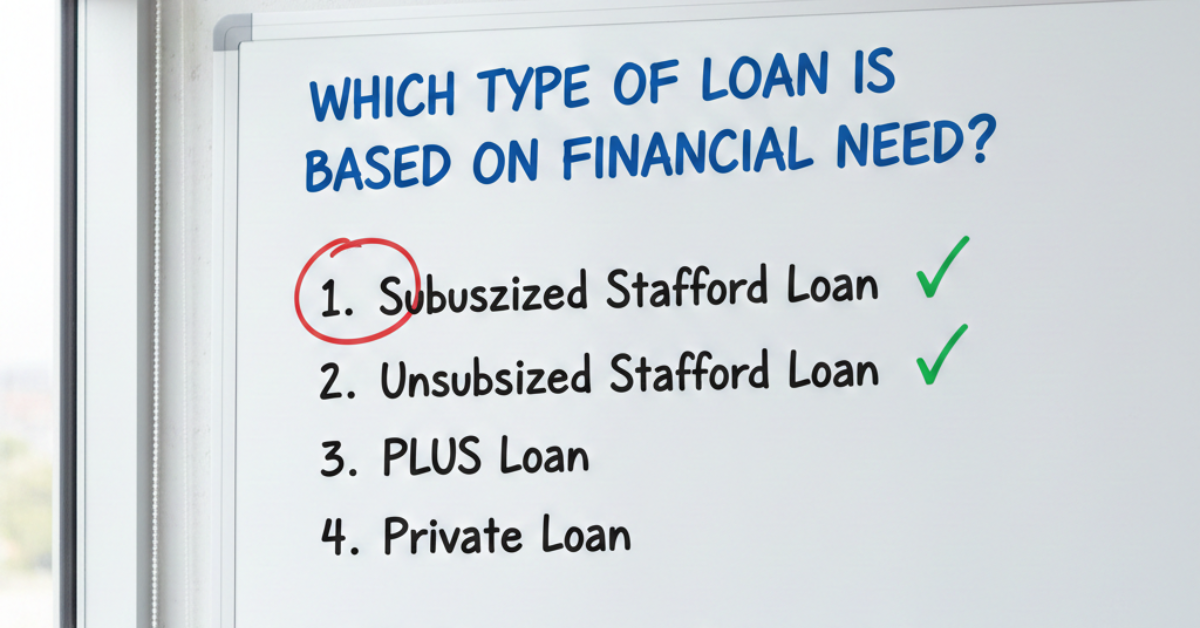
Money shouldn’t be the reason someone misses out on education or essential opportunities. That’s where need-based loans come in. If you’ve ever asked, which type of loan is based on financial need?, the short answer is: subsidized loans.
But there’s more to understand than just the name. This guide breaks down what financial-need loans are, how they work, who qualifies, and how to decide if they’re the right choice.
What Does “Based on Financial Need” Mean?
A loan based on financial need is awarded only if your financial situation shows that you cannot afford the full cost on your own.
Lenders or aid providers look at:
-
Family income and assets
-
Cost of attendance or expenses
-
Household size
-
Number of family members in school
-
Existing financial aid
The goal is simple: bridge the gap between what you can pay and what you need.
Which Type of Loan Is Based on Financial Need?
Subsidized Loans (The Main Need-Based Loan)
The primary answer to which type of loan is based on financial need is:
Subsidized loans — commonly offered through government student aid programs.
How Subsidized Loans Work
Subsidized loans come with a major advantage:
The government pays the interest while you’re in school and during certain deferment periods.
Key features:
-
Awarded only to students with demonstrated financial need
-
Available mainly for undergraduate students
-
Lower overall borrowing cost
-
Interest does not accumulate while studying at least half-time
Because of the interest benefit, subsidized loans are often considered the most affordable student loan option.
How Financial Need Is Calculated
Financial need isn’t based on guesswork. Aid providers use a formula:
Financial Need = Cost of Attendance – Expected Family Contribution (EFC) or Student Aid Index (SAI)
The cost of attendance includes:
-
Tuition and fees
-
Books and supplies
-
Housing and meals
-
Transportation and personal expenses
To determine eligibility, students typically submit a financial aid application (such as the FAFSA in the U.S. or equivalent forms in other countries).
Need-Based vs. Non-Need-Based Loans
Understanding the difference helps you borrow smarter.
Need-Based Loans
-
Subsidized student loans
-
Some government or institutional aid programs
-
Lower interest burden
-
Require proof of financial need
Non-Need-Based Loans
-
Unsubsidized student loans
-
Private education loans
-
Personal loans
-
Credit-based approval rather than income need
Key difference: Non-need loans start accumulating interest immediately.
Other Forms of Need-Based Financial Aid
Loans aren’t the only support available.
You may also qualify for:
-
Grants (free money that doesn’t need repayment)
-
Scholarships based on financial hardship
-
Work-study programs
-
Institutional hardship funds
Always apply for grants and scholarships first before taking any loan.
Who Qualifies for Need-Based Loans?
Eligibility typically depends on:
-
Low to moderate family income
-
Enrollment in an eligible educational program
-
Citizenship or residency requirements
-
Maintaining academic progress
-
Completing financial aid applications accurately and on time
Tip: Apply early. Many need-based funds are limited and awarded on a first-come basis.
Advantages of Loans Based on Financial Need
Why prioritize need-based loans?
-
Lower total repayment cost
-
Interest support during school
-
Flexible repayment options
-
Deferment and hardship protections
-
Reduced financial stress after graduation
If you qualify, these should be your first borrowing choice.
Smart Borrowing Tips
Before accepting any need-based loan:
-
Borrow only what you actually need
-
Understand repayment terms
-
Track your total loan balance yearly
-
Look for forgiveness or income-driven repayment options
-
Combine loans with grants or part-time work
Think long-term. Loans solve today’s problem but create tomorrow’s responsibility.
FAQs: Which Type of Loan Is Based on Financial Need?
1. Which type of loan is based on financial need?
Subsidized student loans are the primary loans awarded based on demonstrated financial need.
2. What is the difference between subsidized and unsubsidized loans?
Subsidized loans have government-paid interest during school, while unsubsidized loans start accruing interest immediately.
3. Do I need good credit for need-based loans?
Most government need-based student loans do not require a credit check.
4. Can graduate students get need-based loans?
Need-based subsidized loans are usually limited to undergraduate students. Graduate students typically receive unsubsidized loans.
5. Are grants better than need-based loans?
Yes. Grants don’t need to be repaid, so always accept grants before loans.
Conclusion
If you’re asking which type of loan is based on financial need, the clear answer is subsidized loans. They’re designed to support students who truly need financial help—and they come with valuable interest benefits that reduce long-term debt.
Start by applying for financial aid early, accept grants first, and use need-based loans only for the gap you can’t cover. Smart borrowing today can save you years of financial pressure later.