
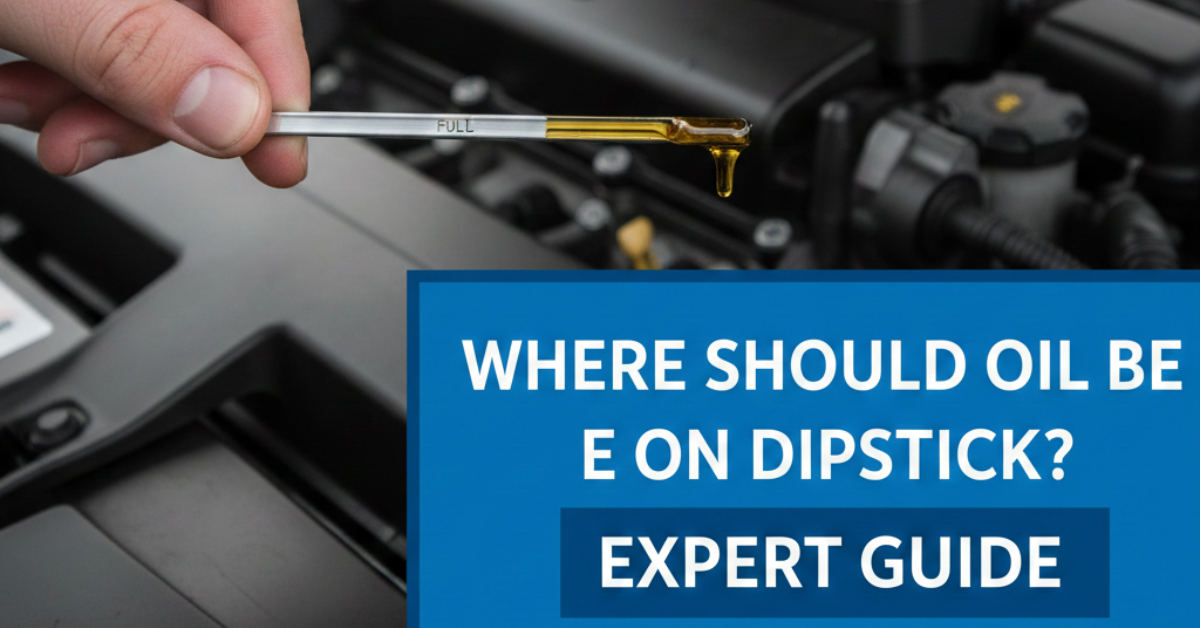
Checking your engine oil may seem simple, but it’s one of the most critical tasks for keeping your car running smoothly. Knowing where oil should be on dipstick ensures your engine stays properly lubricated and prevents costly damage. In this guide, we’ll cover exactly how to read your dipstick, whether your engine is cold or hot, and best practices for maintaining healthy oil levels.
Why Checking Oil Level Matters
Engine oil isn’t just a fluid; it’s your engine’s lifeline. Proper oil levels:
-
Lubricate moving parts to prevent wear
-
Reduce friction and overheating
-
Help your engine run efficiently
Ignoring oil checks can lead to severe problems, including engine seizure. That’s why knowing the correct dipstick reading is essential.
Where Should Oil Be on Dipstick?
Most dipsticks have two marks: “MIN” and “MAX” or crosshatched areas. Here’s what you need to know:
-
Optimal Oil Level: The oil should sit between the minimum and maximum marks, ideally closer to the top mark.
-
Too Low: Oil below the minimum line indicates a refill is needed immediately.
-
Too High: Overfilling can cause foaming, leaks, and engine damage.
Always remember: a small difference on the dipstick can represent a large volume of oil, so check carefully.
Where Should Oil Be on Dipstick When Cold?
Checking oil when the engine is cold gives a more accurate baseline, especially after the car has been parked overnight. Steps:
-
Park on a level surface.
-
Turn off the engine and wait at least 10–15 minutes.
-
Pull out the dipstick, wipe clean, reinsert fully, then remove again.
-
Read the oil level – it should be between the low and high marks, closer to the top if possible.
Cold oil is thicker, so you’ll notice it moves slower along the dipstick. Don’t worry if it clings a bit; that’s normal.
Where Should Oil Be on Dipstick When Hot?
Hot engine oil expands slightly, so the level may appear higher than when cold. To check safely:
-
Let the car idle for a few minutes or drive normally for 5–10 minutes.
-
Park on level ground.
-
Carefully remove the dipstick using a cloth to avoid burns.
-
Oil should still be within the marked range, but the top mark may appear more accurate for hot readings.
Hot readings are especially useful for diagnosing leaks or overfilling.
Tips for Accurate Dipstick Readings
-
Check regularly: At least once a month or before long trips.
-
Use a level surface: Even slight tilts can give false readings.
-
Wipe before checking: Old oil on the dipstick can distort the level.
-
Compare cold vs. hot: If levels vary significantly, there may be a leak or overfill.
-
Know your dipstick type: Some show crosshatch, dots, or lines – always consult your owner’s manual.
Common Signs Your Oil Level Is Wrong
-
Low Oil: Engine noise, overheating, warning lights.
-
High Oil: Blue smoke, foaming, oil leaks.
-
Dirty Oil: Dark, gritty texture means it’s time for a change.
FAQ
Q: Can I drive if oil is below the dipstick’s minimum mark?
A: No. Driving with low oil risks severe engine damage. Top up immediately.
Q: Should I check oil when engine is hot or cold?
A: Both are valid. Cold gives a baseline; hot helps detect overfill or leaks.
Q: How often should I check engine oil?
A: Monthly or before long trips. Older cars benefit from more frequent checks.
Q: What type of oil should I use?
A: Follow your vehicle manufacturer’s recommendation for viscosity and grade.
Conclusion
Knowing where oil should be on dipstick is a small task that prevents big engine problems. Check your oil regularly, understand the difference between hot and cold readings, and maintain proper levels. Taking these simple steps will extend engine life, improve performance, and save money on repairs.
For more tips, you can explore related guides on oil change intervals, choosing the right engine oil, and preventing engine wear.