A rash on your child’s skin can stop you in your tracks. One minute everything’s fine, the next you’re staring at red spots and wondering if it’s serious or just another childhood thing. If you’ve ever Googled when to worry about a rash on a child, you’re not alone—and you’re in the right place.
Most childhood rashes are harmless and clear up on their own. But some rashes are warning signs that need medical attention. This guide breaks it all down in plain English so you know what’s normal, what’s not, and when it’s time to call the doctor.
Why Do Children Get Rashes So Often?
Kids have sensitive skin and developing immune systems. That makes them more likely to react to things adults shrug off.
Common reasons children get rashes include:
-
Viral or bacterial infections
-
Allergic reactions
-
Heat and sweat
-
Diaper irritation
-
New foods, soaps, or detergents
-
Insect bites
Most of the time, the rash looks worse than it actually is. The key is knowing which symptoms change the situation.
When to Worry About a Rash on a Child
Here’s the part parents really care about. You should take a rash seriously if it shows up with any of the signs below.
1. Rash With Fever
A rash plus a fever can signal an infection.
Call a doctor if:
-
Fever is above 100.4°F (38°C) in infants
-
Fever lasts more than 48 hours
-
The rash spreads quickly while fever worsens
This combination can point to illnesses like measles, scarlet fever, or viral infections that need monitoring.
2. Rash That Doesn’t Fade When Pressed
Do a simple “glass test”:
-
Press a clear glass against the rash
-
If the rash doesn’t fade, seek medical help immediately
This can be a sign of serious conditions like meningococcal infection.
3. Rash With Breathing Problems or Swelling
This is an emergency.
Watch for:
-
Swelling of lips, tongue, or face
-
Difficulty breathing
-
Hives spreading rapidly
These are signs of a severe allergic reaction (anaphylaxis). Call emergency services right away.
4. Painful, Blistering, or Oozing Rashes
Rashes should not be extremely painful.
Be cautious if the rash:
-
Forms blisters or open sores
-
Leaks pus or fluid
-
Looks infected (red, warm, swollen)
These may be bacterial skin infections like impetigo or cellulitis.
5. Rash in a Newborn or Infant
Babies under 3 months old need extra caution.
Call your pediatrician if:
-
Any rash appears with fever
-
The baby seems unusually sleepy or fussy
-
The rash spreads rapidly
Young infants can’t fight infections well, so early evaluation matters.
Common Childhood Rashes (Usually Not Serious)
Not every rash is a red flag. These are common and often harmless.
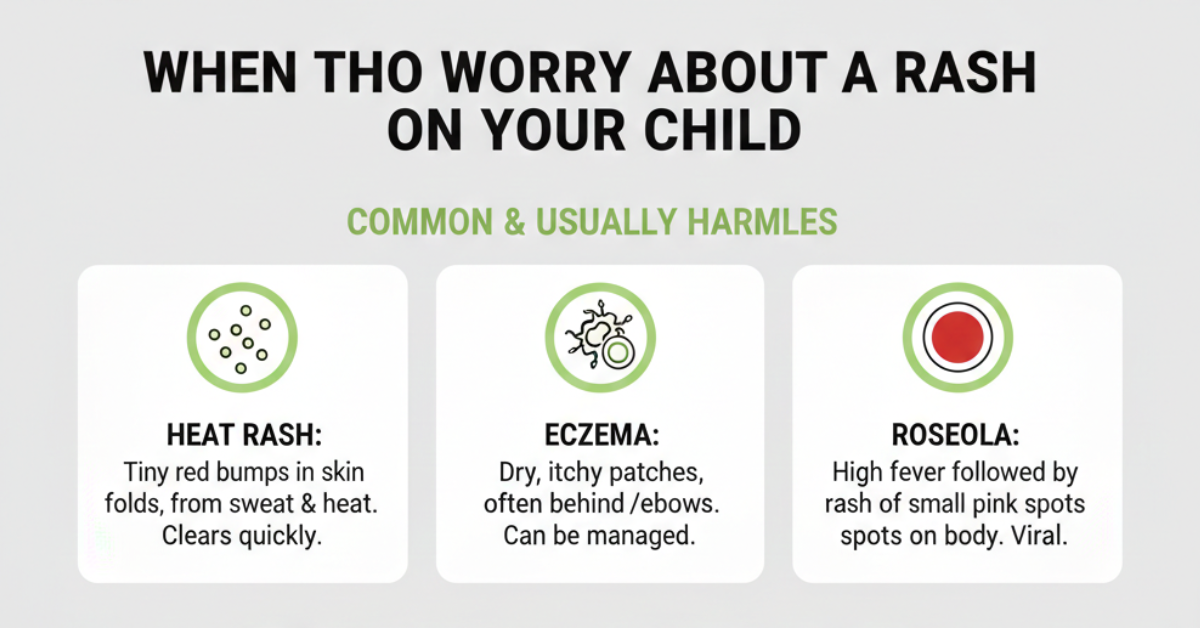
Heat Rash
-
Tiny red bumps
-
Appears in hot weather
-
Improves with cooling and loose clothing
Diaper Rash
-
Red, irritated skin
-
Usually clears with barrier cream and air exposure
Eczema
-
Dry, itchy patches
-
Chronic but manageable
Viral Rashes
-
Appear after mild cold symptoms
-
Fade within a few days
If your child is otherwise acting normal, eating well, and playing, the rash is usually not an emergency.
How to Monitor a Rash at Home
If the rash seems mild, here’s what to do:
-
Take photos to track changes
-
Note when it appeared and spread
-
Avoid new products or foods
-
Keep skin clean and dry
-
Use fragrance-free moisturizers
If it improves within 24–48 hours, that’s a good sign.
When to Call the Doctor (Quick Checklist)
Call your pediatrician if:
-
Rash lasts more than a few days
-
Your child seems very uncomfortable
-
The rash spreads rapidly
-
Your child isn’t eating or drinking
-
You’re simply unsure
Trust your instincts. You know your child better than anyone.
FAQs: When to Worry About Rash on Child
Is a rash always a sign of infection?
No. Many rashes are caused by allergies, heat, or irritation rather than infection.
Can teething cause rashes?
Teething can cause drool-related rashes around the mouth, but not widespread body rashes.
Should I send my child to school with a rash?
If the rash is unexplained, spreading, or paired with fever, keep them home and consult a doctor.
Are viral rashes contagious?
Some are. It depends on the virus, so it’s best to get a diagnosis if you’re unsure.
Can food allergies cause rashes in children?
Yes. Hives or red patches shortly after eating a new food can signal an allergy.
Conclusion: Know When to Act, Not When to Panic
Figuring out when to worry about a rash on a child isn’t about memorizing medical terms—it’s about noticing patterns. Most rashes are harmless, but certain symptoms mean it’s time to act. When in doubt, don’t wait it out. A quick call to your pediatrician can save you stress and give your child the care they need.