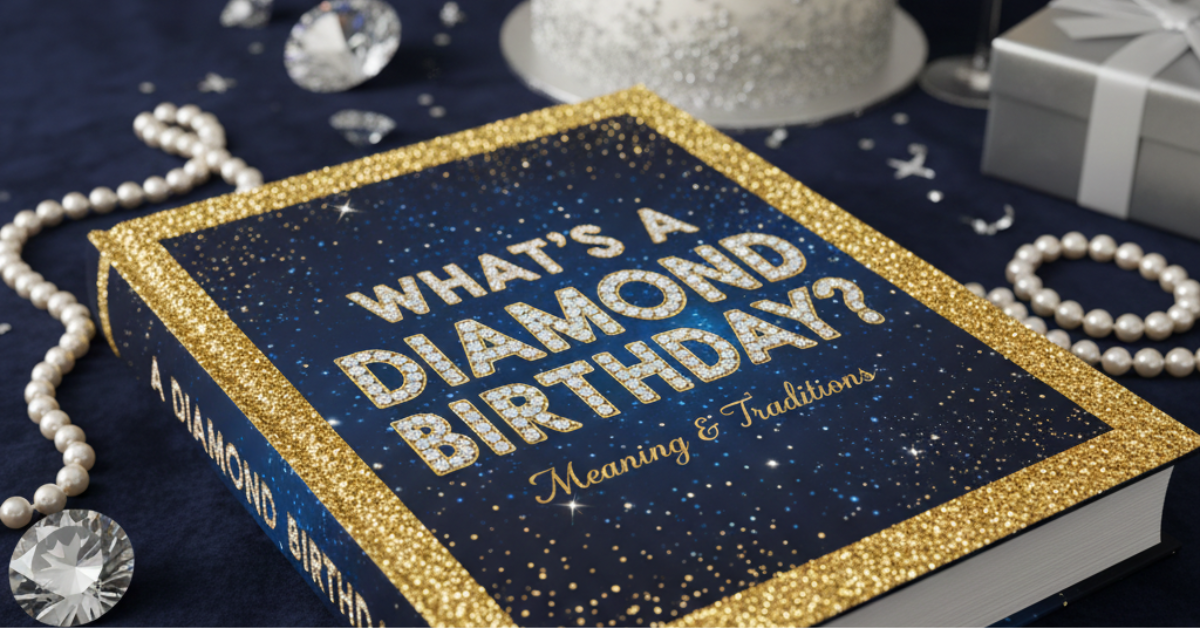
Ever heard someone say they’re celebrating a diamond birthday and wondered what that actually means? You’re not alone. The phrase sounds fancy, maybe even expensive—but it carries a unique and personal meaning.
If you’ve been searching for whats a diamond birthday, this guide breaks it down clearly. We’ll cover the definition, where the idea comes from, how it’s different from golden birthdays, and how to celebrate one properly—without overcomplicating it.
Let’s get into it.
What’s a Diamond Birthday?
A diamond birthday is when someone turns the same age as the date of their birth — specifically when their age matches a double-digit birth date (like the 11th, 22nd, or 30th).
For example:
-
Born on June 11 → Diamond birthday at age 11
-
Born on August 22 → Diamond birthday at age 22
-
Born on September 30 → Diamond birthday at age 30
Some people also use the term to describe a 60th birthday, connecting it to the 60th wedding anniversary, traditionally known as the diamond anniversary. Both interpretations exist, but the date-match version is more commonly used in modern celebrations.
Where Did the Diamond Birthday Idea Come From?
Unlike traditional anniversaries, diamond birthdays aren’t rooted in ancient customs. They’re part of modern milestone birthday trends — similar to:
-
Golden birthdays
-
Platinum birthdays
-
Champagne birthdays
The idea plays on symbolism. Diamonds represent:
-
Strength
-
Rarity
-
Value
-
Longevity
That’s why the term “diamond” feels special — it suggests something rare and worth celebrating.
Diamond Birthday vs Golden Birthday: What’s the Difference?
Many people confuse the two, so let’s clear it up.
Golden Birthday
A golden birthday happens when your age matches your birth date.
Example:
-
Born on May 18 → Golden birthday at age 18.
Diamond Birthday
A diamond birthday often refers to:
-
A double-digit date match (11th, 22nd, 33rd, etc.), or
-
A symbolic milestone like 60 years old.
The golden birthday is more widely recognized, but the diamond version feels more exclusive and unique.
Why Is It Called “Diamond”?
Diamonds are rare. So are certain birthday combinations.
Think about it:
-
Not everyone has a double-digit birth date.
-
Not everyone will reach 60.
-
Certain number combinations only happen once.
That exclusivity is what makes the diamond birthday feel elevated. It’s not just another year — it’s a once-in-a-lifetime alignment.
How to Celebrate a Diamond Birthday
If you’re planning one, don’t just throw a regular party and call it special. Make it intentional.
Here are solid ideas:
1. Go with a Diamond Theme
-
Silver and white decor
-
Crystal centerpieces
-
Sparkle-themed invitations
-
Dress code: black and white elegance
2. Create a “Shine” Moment
Highlight the person’s achievements:
-
A short tribute speech
-
A memory slideshow
-
A scrapbook of milestones
3. Gift Ideas That Fit the Theme
You don’t need to buy an actual diamond (unless you want to).
Better options:
-
Custom birthstone jewelry
-
Engraved keepsakes
-
A luxury experience (spa day, dinner, travel)
-
Personalized photo frames with crystal detailing
4. Make It About Legacy
If it’s a 60th diamond birthday:
-
Invite close family and friends
-
Share stories
-
Record video messages
-
Celebrate long-term impact and achievements
Is a Diamond Birthday a Big Deal?
It depends on how you frame it.
If you treat it like just another birthday, it won’t feel special. But if you lean into the rarity, symbolism, and storytelling. It becomes meaningful.
Milestones matter because they create pause. They make you reflect.
And reflection builds perspective.
That’s the real value of a diamond birthday.
Cultural and Symbolic Meaning of Diamonds
Diamonds have long represented permanence and resilience. For example, the 60th wedding anniversary is traditionally called the “diamond anniversary,” a custom recognized by institutions like the British royal family, including celebrations during the reign of Queen Elizabeth II.
That association reinforces the idea of strength and endurance — themes often carried into diamond birthday celebrations as well.
For additional background on gemstone symbolism, you can reference external sources such as:
-
The Gemological Institute of America (GIA)
-
Encyclopaedia Britannica’s entry on diamonds
Diamond Birthday Party Planning Checklist
If you’re serious about making it memorable, follow this structure:
-
Confirm the type (date-match or 60th milestone).
-
Choose a diamond-inspired theme.
-
Plan a personal tribute.
-
Invite meaningful guests.
-
Capture the event (photos, video, guestbook).
-
Create a takeaway memory (custom favors).
Execution beats intention every time. Plan it properly.
FAQs About Diamond Birthdays
What’s a diamond birthday exactly?
A diamond birthday typically happens when your age matches a double-digit birth date (like turning 22 on the 22nd). Some also use it to describe turning 60.
Is a diamond birthday the same as a golden birthday?
No. A golden birthday happens when your age matches your birth date. A diamond birthday usually refers to double-digit matches or the 60th birthday.
Is 75 considered a diamond birthday?
Not traditionally. The most widely accepted milestone tied to diamonds is 60, similar to a diamond wedding anniversary.
Do you need to give a real diamond gift?
No. The theme is symbolic. Meaningful and personalized gifts are often more impactful than expensive ones.
Is a diamond birthday rare?
Yes — especially if referring to double-digit date matches. Not everyone has those calendar combinations.
Final Thoughts: What’s a Diamond Birthday Really About?
At its core, whats a diamond birthday isn’t just about numbers. It’s about rarity, symbolism, and taking a moment to celebrate something that won’t happen again.
If you’re approaching one — don’t waste it.
Make it intentional.
>Make it shine.