Getting blood test results back can be stressful — especially when you notice something like RDW marked as “high” or “abnormal.” Naturally, the first question people ask is: what level of RDW is dangerous?
RDW, or Red Cell Distribution Width, measures how much your red blood cells vary in size. While a slightly abnormal RDW isn’t always an emergency, certain levels can point to serious issues like anemia, vitamin deficiencies, or pregnancy-related complications.
In this guide, we’ll break down what RDW means, what levels are considered dangerous, and what to do next.
What Is RDW in a Blood Test?
RDW stands for Red Cell Distribution Width. It’s part of a Complete Blood Count (CBC) test.
It tells doctors whether your red blood cells are:
-
Mostly uniform in size (normal)
-
Very different in size (high RDW)
A high RDW means there’s more variation, which can happen when your body is struggling to produce healthy red blood cells.
Normal RDW Range
Most labs consider RDW normal between:
11.5% to 14.5%
Slight differences depend on the lab, but values outside this range may need attention.
What Level of RDW Is Dangerous?
Here’s the honest answer: RDW becomes more concerning when it’s significantly elevated, especially with symptoms or other abnormal blood values.
RDW Levels and What They May Mean
-
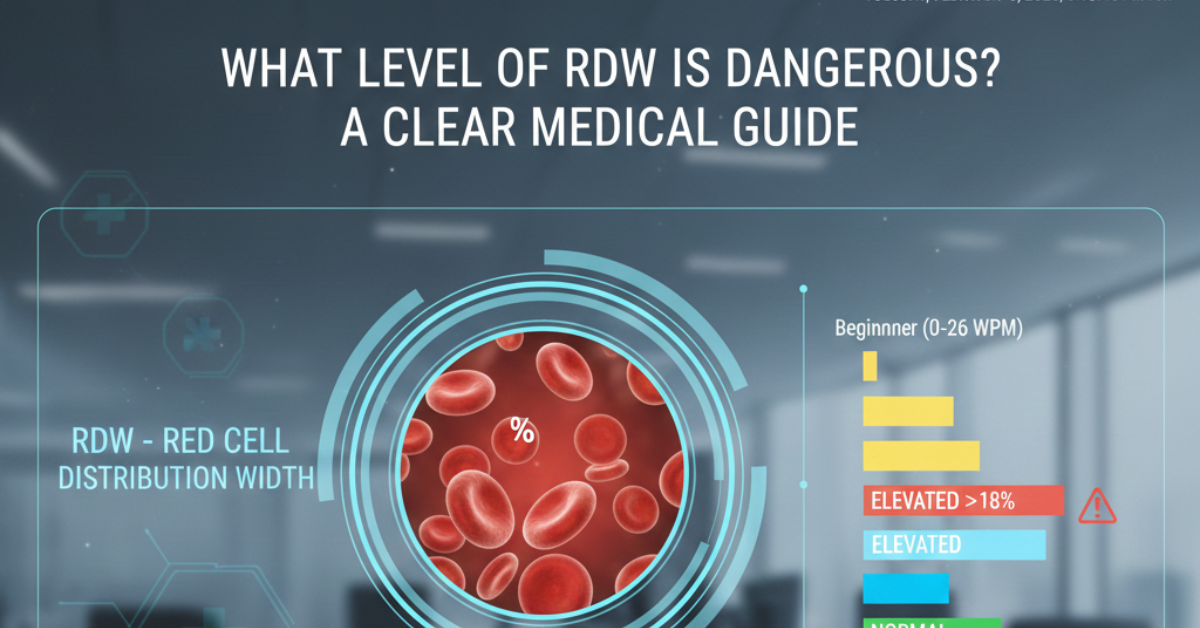
14.5%–15.5% → Mildly high (often early deficiency)
-
15.5%–17% → Moderately high (common in anemia)
-
Above 17% → Potentially dangerous, needs evaluation
-
Above 20% → Strong red flag, may indicate serious underlying disease
So, if you’re asking what level of RDW is dangerous, most doctors start worrying when RDW is consistently above 17%, especially alongside low hemoglobin.
Symptoms That Make High RDW More Serious
High RDW is more dangerous if you also have:
-
Extreme fatigue
-
Shortness of breath
-
Pale skin
-
Dizziness
-
Rapid heartbeat
If those symptoms are present, don’t ignore it.
What Causes a Dangerous High RDW?
A high RDW is not a disease — it’s a clue.
Common causes include:
-
Iron deficiency anemia
-
Vitamin B12 or folate deficiency
-
Chronic inflammation
-
Liver disease
-
Bone marrow disorders
-
Recent blood loss
A doctor will usually look at RDW along with:
-
Hemoglobin (Hb)
-
MCV (mean cell volume)
-
Ferritin and iron levels
What Level of RDW Is Dangerous in Pregnancy?
Pregnancy changes blood volume and iron needs dramatically.
So, what level of RDW is dangerous in pregnancy?
In Pregnancy, RDW Above 15% May Need Attention
-
15%–16% → Possible iron deficiency
-
Above 16%–17% → Higher risk of anemia complications
-
Above 18% → Needs urgent evaluation
High RDW in pregnancy may signal:
-
Iron deficiency anemia (very common)
-
Folate deficiency
-
Increased risk of preterm delivery if untreated
Pregnant women should never self-diagnose — this requires proper prenatal monitoring.
What Level of RDW Is Dangerous Low?
People often ask: what level of RDW is dangerous low?
Here’s the reality:
Low RDW Is Usually Not Dangerous
A low RDW simply means your red blood cells are very similar in size.
Most doctors do not consider low RDW a medical concern unless other CBC values are abnormal.
So, what level of RDW is dangerous low?
Almost never — low RDW is rarely linked to serious disease.
When Should You Worry About RDW Results?
You should take RDW seriously if:
-
RDW is above 17%
-
You have anemia symptoms
-
You’re pregnant with rising RDW
-
Hemoglobin or MCV is abnormal
Best Next Steps
-
Don’t panic from one test
-
Repeat CBC if needed
-
Check iron, B12, folate levels
-
Speak to a doctor or hematologist
FAQs About Dangerous RDW Levels
What level of RDW is considered dangerously high?
Most doctors become concerned when RDW is above 17%, especially with anemia or symptoms.
Can high RDW be life-threatening?
RDW itself isn’t life-threatening, but it may point to serious conditions like severe anemia or chronic disease.
What level of RDW is dangerous in pregnancy?
In pregnancy, RDW above 16–17% may signal iron deficiency and should be evaluated quickly.
What level of RDW is dangerous low?
Low RDW is almost never dangerous and usually has no clinical significance.
How can I lower my RDW naturally?
If caused by deficiency, treatment may include:
-
Iron-rich foods
-
Vitamin B12 supplementation
-
Folate intake
-
Medical treatment for underlying illness
Always confirm the cause with your doctor first.
Conclusion
So, what level of RDW is dangerous?
In most cases, RDW becomes concerning when it rises above 17%, and it’s especially important during pregnancy, where high RDW may signal anemia or nutrient deficiency.Low RDW, on the other hand, is rarely dangerous. The key takeaway: RDW is a useful warning sign — but it must be interpreted with other blood values and symptoms. If your RDW is high, don’t guess. Get proper medical advice and follow-up testing.