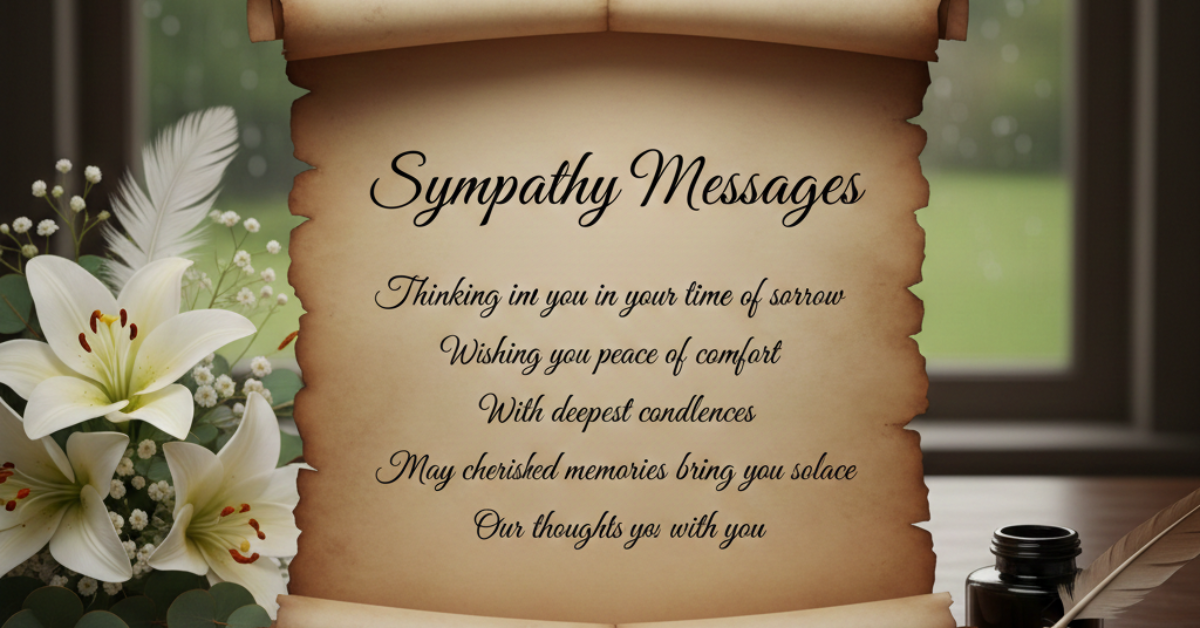
When someone you care about is grieving, words often feel painfully inadequate. Still, a thoughtful sympathy messages can offer comfort, support, and a reminder that they are not alone. Knowing what to say—and how to say it—matters more than being perfect.
In this guide, we’ll explore sympathy messages that feel genuine, compassionate, and appropriate for different situations. Whether you’re looking for meaningful sympathy messages, words for the loss of a mother or father, or gentle pet sympathy messages, you’ll find guidance and examples that truly resonate.
Why Sympathy Messages Matter More Than You Think
Grief can feel isolating. A well-chosen sympathy message helps bridge that emotional gap by showing care, presence, and understanding.
A good sympathy message can:
-
Acknowledge the pain of loss
-
Offer emotional reassurance
-
Provide quiet support without pressure
-
Help the grieving feel seen and remembered
Even a few sincere words can mean everything during a difficult time.
How to Write Meaningful Sympathy Messages
Before writing, remember this: simple and sincere always wins.
Key Tips for Writing Sympathy Messages
-
Keep the focus on the person who is grieving
-
Avoid clichés or overly dramatic language
-
Acknowledge the loss directly
-
Offer support without trying to “fix” the pain
-
Keep it heartfelt and honest
You don’t need poetic language—just compassion.
55 Sympathy Messages for Different Situations
Below are thoughtfully written examples you can use or adapt.
General Sympathy Messages
-
“I’m so sorry for your loss. Please know you’re in my thoughts.”
-
“Sending love and strength during this difficult time.”
-
“My heart goes out to you and your family.”
-
“Wishing you comfort and peace as you remember your loved one.”
Meaningful Sympathy Messages That Feel Personal
Sometimes, deeper words help express shared grief and understanding.
-
“No words can ease the pain, but please know you are deeply cared for.”
-
“Your loved one’s memory will always live on through the lives they touched.”
-
“Holding you close in my thoughts during this heartbreaking time.”
Sympathy Messages for Loss of Mother
Losing a mother is an immeasurable loss. These messages honor that unique bond.
-
“Your mother’s love and kindness will never be forgotten.”
-
“May her memory bring you comfort in moments of sorrow.”
-
“She raised an incredible person, and her legacy lives through you.”
Sympathy Messages for Loss of Father
A father’s guidance and strength leave a lasting mark.
-
“Your father’s wisdom and love will always remain with you.”
-
“May you find peace in the memories you shared together.”
-
“Thinking of you as you honor your father’s remarkable life.”
Pet Sympathy Messages
The loss of a pet is deeply personal and often underestimated.
-
“Your pet was family, and their love will always be remembered.”
-
“So sorry for the loss of your faithful companion.”
-
“They may be gone, but their paw prints remain forever in your heart.”
Religious Sympathy Messages
Faith-based messages can bring spiritual comfort.
-
“May God grant you peace and strength during this time.”
-
“Keeping you in my prayers as you grieve.”
-
“May the Lord’s love surround you and your family.”
With Sympathy Messages for Cards or Flowers
Short and respectful messages often work best.
-
“With deepest sympathy.”
-
“With heartfelt condolences.”
-
“Thinking of you with sympathy and care.”
What to Avoid Saying in Sympathy Messages
Even well-meaning words can sometimes hurt.
Avoid phrases like:
-
“Everything happens for a reason”
-
“They’re in a better place” (unless faith is shared)
-
“I know exactly how you feel”
-
“At least they lived a long life”
Focus on empathy, not explanations.
FAQs About Sympathy Messages
What is the best sympathy message to write?
The best sympathy message is sincere, compassionate, and tailored to the person’s loss.
How long should a sympathy message be?
It can be short or long—what matters most is genuine emotion, not length.
Are religious sympathy messages always appropriate?
Only if you’re certain the recipient shares similar beliefs.
Is it okay to send sympathy messages via text?
Yes. A heartfelt message is better than silence, especially when distance is a factor.
Should I mention the deceased by name?
Yes, when appropriate—it shows respect and personal connection.
Conclusion: Words That Truly Matter
Writing sympathy messages isn’t about finding perfect words—it’s about showing care, compassion, and presence. Whether you choose a simple note or a deeply meaningful sympathy message, your effort can offer comfort when it’s needed most.