Ever wondered how long alcohol stays in your system? Whether it’s after a night out, a social drink, or before a probation test, knowing the facts can help you stay safe and make informed decisions.
Alcohol doesn’t disappear instantly. Your body processes it gradually, and the timeline depends on several factors including your weight, metabolism, and how much you’ve consumed. In this article, we’ll break down how alcohol is metabolized, detection times for tests like breathalyzers and urine tests, and tips to help your body process it efficiently.
How Alcohol Is Metabolized in the Body
When you drink, alcohol enters your bloodstream and travels throughout your body. The liver is primarily responsible for breaking it down. On average, the liver metabolizes one standard drink per hour, but this rate can vary.
Factors That Affect Alcohol Metabolism
-
Body weight and composition – Heavier individuals often process alcohol faster.
-
Gender – Women generally metabolize alcohol slower than men due to body fat percentage and enzymes.
-
Age – Metabolism slows with age.
-
Food intake – Drinking on an empty stomach speeds up absorption.
-
Medications and health conditions – Liver health and certain drugs can affect processing.
Average Detection Times for Alcohol
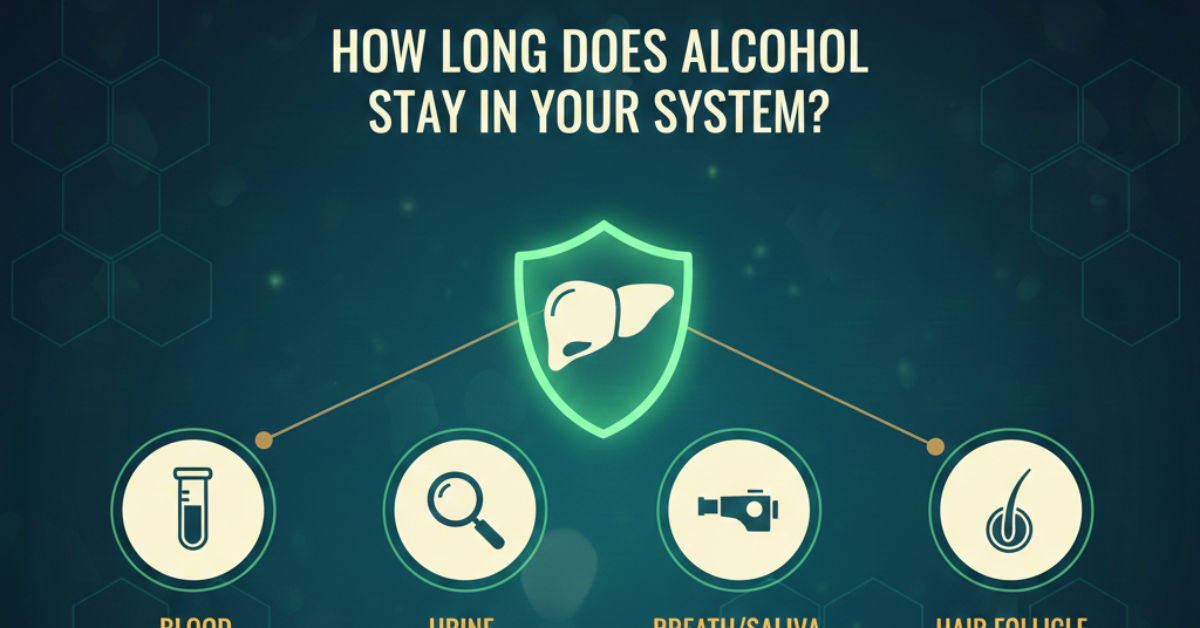
Depending on the testing method, alcohol can be detected in your body for different periods.
1. Breathalyzer Tests
-
Alcohol is detectable in breath almost immediately.
-
Typically, up to 12–24 hours after your last drink, depending on amount consumed.
2. Blood Tests
-
Alcohol enters the bloodstream within minutes.
-
Detectable for up to 12 hours after drinking.
-
Blood tests are highly accurate but are usually used for immediate or recent consumption checks.
3. Urine Tests
-
Alcohol can be found in urine for 12–48 hours, and in some advanced tests (ETG urine test) up to 80 hours.
-
Urine tests are often used for probation drug tests or workplace screenings.
4. Saliva and Hair Tests
-
Saliva Detectable for 1–5 days.
-
Hair: Can detect alcohol use over 3 months, but usually measures chronic consumption rather than single events.
How Long Does Alcohol Stay in Your System for a Probation Drug Test?
If you’re facing probation testing, it’s crucial to understand detection windows:
-
Standard urine test: 12–48 hours
-
ETG (ethyl glucuronide) urine test: up to 80 hours
-
Breathalyzer: Typically 24 hours or less
Remember, even if you “feel sober,” traces can remain detectable, so always plan responsibly.
Tips to Help Your Body Process Alcohol Safely
While nothing instantly “flushes” alcohol, these strategies can help:
-
Stay hydrated – Water helps reduce dehydration caused by alcohol.
-
Eat before drinking – Slows absorption and reduces peak blood alcohol levels.
-
Get adequate rest – Sleep supports metabolism and recovery.
-
Avoid excessive drinking – Moderation is the most effective strategy.
Common Misconceptions About Alcohol Elimination
-
Coffee or cold showers don’t speed up elimination – Only time works.
-
Sweating doesn’t remove alcohol from your system faster – Minor effect only.
-
Feeling sober doesn’t mean alcohol is gone – Tests can still detect it.
FAQs About Alcohol Detection
How long does alcohol stay in your system?
Typically 12–48 hours, depending on the testing method and individual factors.
How long does alcohol stay in your system for a breathalyzer?
Breathalyzer tests detect alcohol for up to 12–24 hours.
How long does alcohol stay in your system for a urine test?
Standard urine tests: 12–48 hours. ETG urine tests: up to 80 hours.
How long does alcohol stay in your system for a probation drug test?
Probation tests use urine or ETG tests. Alcohol may be detectable 2–3 days after drinking.
Can you speed up alcohol elimination?
No method instantly removes alcohol. Hydration, food, and rest help your body process it naturally.
Conclusion
Understanding how long alcohol stays in your system is important for safety, health, and compliance with tests like breathalyzers or probation screenings. Most alcohol clears within 12–48 hours, but individual factors can extend this window. The safest approach is always moderation, planning ahead, and giving your body time to metabolize alcohol naturally. For more information, you can explore related articles on alcohol metabolism, safe drinking habits, and testing methods.