
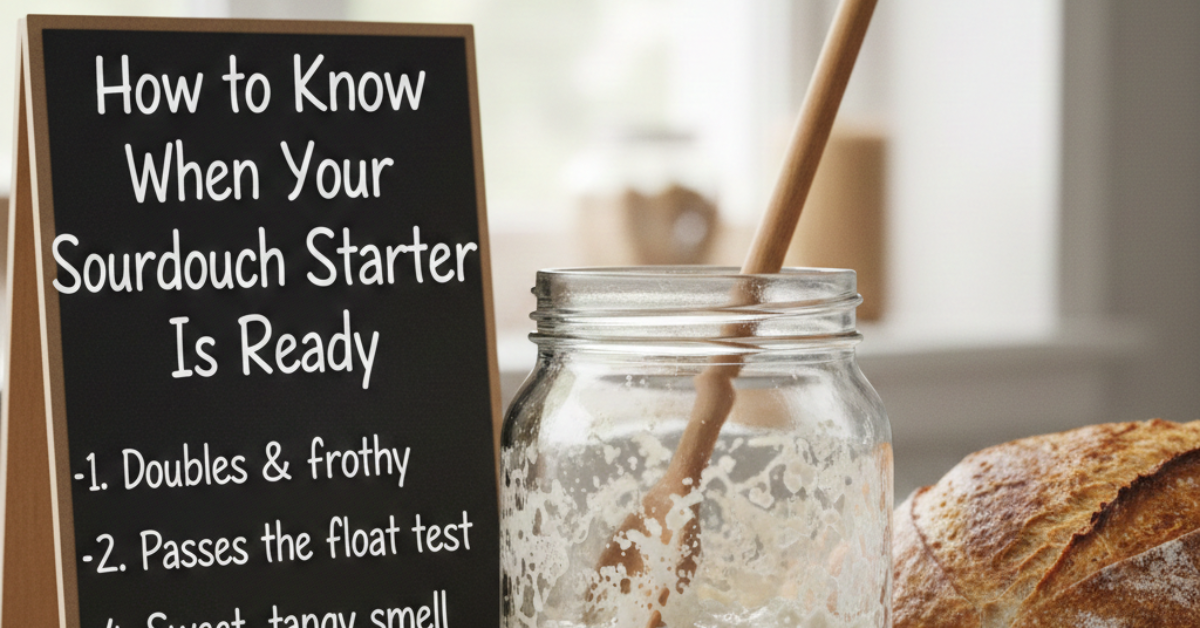
If you’ve been feeding flour and water for days and wondering, “How do I know when my sourdough starter is ready?”—you’re not alone. This is the moment every home baker waits for. A ready sourdough starter is alive, active, and strong enough to raise bread naturally.
In this guide, you’ll learn the clear signs your starter is ready to bake, simple tests to confirm it, and what to do if it’s not quite there yet.
The 5 Clear Signs Your Sourdough Starter Is Ready
1. It Doubles (or Triples) in Size
The most reliable indicator is growth. After feeding:
-
Your starter should double in volume within 4–8 hours (at room temperature).
-
Use a rubber band or marker to track the rise.
-
Strong starters may even triple.
If it rises slowly or barely moves, it needs more time and consistent feeding.
2. You See Lots of Bubbles
An active starter looks lively:
-
Small and large bubbles throughout
-
A slightly spongy or airy texture
-
Surface may look domed at peak activity
Bubbles mean fermentation is happening—wild yeast and bacteria are doing their job.
3. It Passes the Float Test
The float test is a quick confidence check:
How to do it:
-
Fill a glass with room-temperature water.
-
Drop in a small spoonful of starter.
-
If it floats, it’s ready to bake.
Important: Only test when the starter is at its peak rise. If it sinks, it may be under-fermented or past its peak.
4. It Smells Pleasantly Tangy
A healthy starter should smell:
-
Mildly sour or yogurt-like
-
Slightly sweet or fruity
Avoid using it if it smells:
-
Strongly like alcohol or nail polish (it’s hungry)
-
Rotten or putrid (possible contamination)
5. It Has a Predictable Feeding Cycle
Consistency matters. A mature sourdough starter:
-
Peaks at the same time after each feeding
-
Rises and falls in a regular pattern
-
Stays active day after day
If the timing changes dramatically, the culture is still stabilizing.
How Long Does It Take for a Starter to Be Ready?
Most starters become bake-ready in 7–14 days, but temperature, flour type, and feeding schedule matter.
Factors that speed things up:
-
Warm room (22–26°C / 72–78°F)
-
Whole wheat or rye flour
-
Regular feedings (every 12–24 hours)
If your starter is over two weeks old and still weak, increase feeding frequency or move it to a warmer spot.
When Is the Best Time to Use Your Starter?
Always use your starter at peak activity:
Peak signs:
-
Maximum height
-
Rounded or slightly domed surface
-
Full of bubbles
-
Passes the float test
Using it too early = weak rise.
Using it after collapse = slower fermentation.
Common Mistakes That Make a Starter Seem “Not Ready”
-
Feeding inconsistently – stick to a schedule.
-
Using too much water – overly thin starters trap less gas.
-
Cold environment – slows fermentation.
-
Testing after collapse – it may have already peaked.
If you see a gray liquid (hooch), don’t panic—just feed the starter.
Quick Readiness Checklist
Your sourdough starter is ready if it:
-
Doubles in 4–8 hours
-
Looks bubbly and airy
-
Smells pleasantly sour
-
Passes the float test
-
Peaks consistently after feeding
If you can check all five boxes, you’re ready to bake.
FAQs About Sourdough Starter Readiness
How do I know when my sourdough starter is ready for the first time?
When it doubles reliably within 4–8 hours for several consecutive days and shows strong bubbling and a tangy aroma.
Why does my starter float one day and sink the next?
You’re likely testing at different stages. Always test at peak rise.
Can I bake without the float test?
Yes. If your starter doubles quickly and looks active, the float test isn’t essential.
My starter smells like alcohol—what should I do?
It’s hungry. Discard most of it and feed fresh flour and water.
What if my starter takes more than two weeks?
Keep feeding consistently and maintain a warm environment. Some starters simply develop slower.
Conclusion
If you’ve been asking, how do I know when my sourdough starter is ready, the answer comes down to strength and consistency. Look for a starter that doubles quickly, bubbles actively, smells fresh and tangy, and peaks on schedule.
Once it hits that rhythm, don’t overthink it—use it at peak and start baking. Sourdough rewards action, not perfection. Your best loaf comes from practice, not waiting for a “perfect” starter.