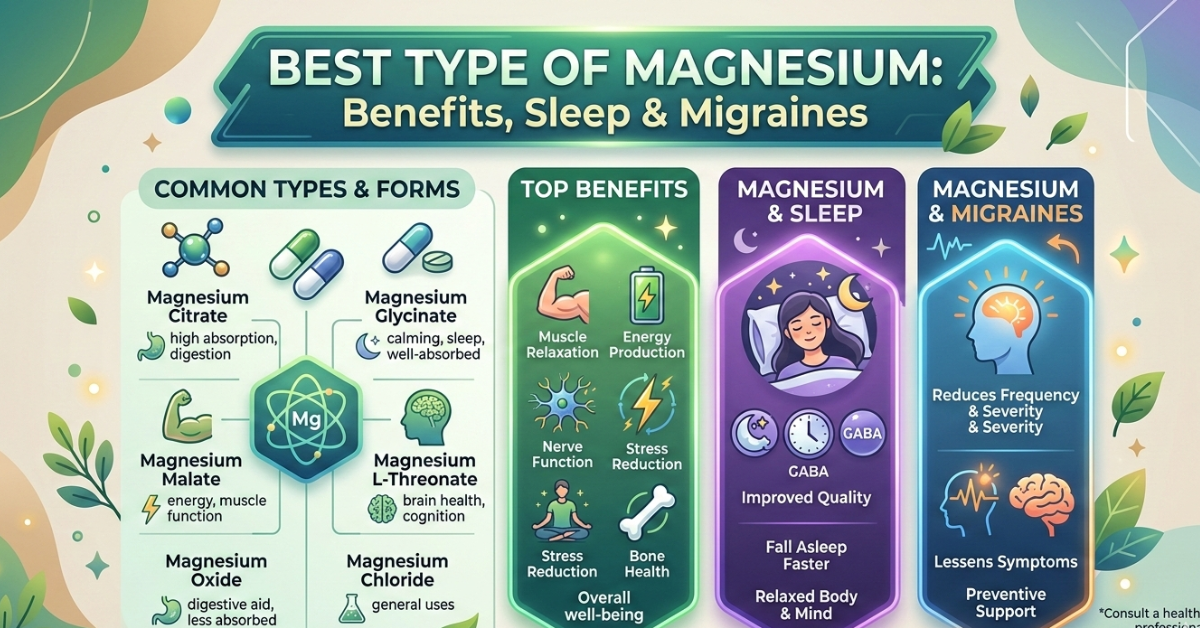
Magnesium is one of those nutrients most people don’t think about—until they start feeling the effects of low levels: poor sleep, muscle cramps, headaches, fatigue, or anxiety. If you’ve ever searched which type of magnesium is best, you’ve probably noticed there isn’t just one answer. That’s because different forms of magnesium serve different purposes.
In this guide, we’ll break down the most effective types of magnesium, what they’re best for, and how to choose the right one for your specific goal—whether that’s better sleep, migraine relief, or overall wellness.
Why Magnesium Matters for Your Body
Magnesium supports more than 300 biochemical reactions in the body. It plays a key role in:
-
Muscle and nerve function
-
Sleep regulation
-
Energy production
-
Heart health
-
Blood sugar control
-
Stress response
Modern diets and high stress levels mean many people don’t get enough. Choosing the right form makes a big difference in how well your body absorbs and uses it.
Types of Magnesium and What They’re Best For
Magnesium Glycinate (Best Overall Choice)
If you’re asking which type of magnesium is best overall, magnesium glycinate is the top contender.
Why it works:
-
Highly absorbable
-
Gentle on the stomach
-
Calming effect on the nervous system
Best for:
-
Anxiety and stress
-
Muscle tension
-
General magnesium deficiency
-
Sensitive digestion
It’s often recommended as a daily magnesium supplement because it balances effectiveness with minimal side effects.
Which Type of Magnesium Is Best for Sleep?
Magnesium Glycinate & Magnesium L-Threonate
1. Magnesium Glycinate
-
Promotes relaxation
-
Supports melatonin production
-
Helps reduce nighttime anxiety
2. Magnesium L-Threonate
-
Crosses the blood–brain barrier
-
Supports brain health and memory
-
May improve sleep quality and mental calm
If your sleep problems are linked to stress or racing thoughts, these are your best options.
Which Type of Magnesium Is Best for Migraines?
Magnesium Citrate & Magnesium Oxide
Research shows magnesium deficiency is common in people who experience migraines.
Top choices:
Magnesium Citrate
-
Well absorbed
-
Supports nerve and muscle function
-
Commonly recommended for migraine prevention
Magnesium Oxide
-
Often used in clinical migraine studies
-
Affordable and widely available
-
May cause digestive upset in some people
For frequent migraines, many healthcare providers suggest 400–600 mg daily (always confirm with a professional).
Other Types of Magnesium (And When to Use Them)
Magnesium Citrate
-
Best for: Constipation relief
-
Acts as a gentle osmotic laxative
Magnesium Malate
-
Best for: Fatigue and muscle pain
-
Often used by people with fibromyalgia or chronic fatigue
Taurate
-
Best for: Heart health and blood pressure
Chloride
-
Best for: Topical use (magnesium oil) and general absorption
How to Choose the Best Magnesium for You
Use this quick guide:
| Goal | Best Type |
| Overall health | Magnesium glycinate |
| Sleep & relaxation | Glycinate or L-threonate |
| Migraines | Citrate or oxide |
| Constipation | Citrate |
| Energy & muscle pain | Malate |
| Heart health | Taurate |
Dosage tips:
-
Typical range: 200–400 mg daily
-
Start low and increase gradually
-
Take with food if sensitive to supplements
Signs You Might Need Magnesium
-
Poor sleep
-
Frequent headaches or migraines
-
Muscle cramps or twitching
-
Fatigue or low energy
-
Anxiety or irritability
If several of these sound familiar, magnesium may be worth discussing with your healthcare provider.
FAQs
1. Which type of magnesium is best overall?
Magnesium glycinate is generally considered the best overall due to its high absorption and calming effects.
2. Which type of magnesium is best for sleep?
Magnesium glycinate and magnesium L-threonate are the top choices for improving sleep quality and relaxation.
3. Which type of magnesium is best for migraines?
Magnesium citrate and magnesium oxide are commonly recommended for migraine prevention.
4. When should I take magnesium?
For sleep support, take it 30–60 minutes before bed. Otherwise, it can be taken with meals.
5. Are there side effects?
High doses may cause diarrhea or stomach upset, especially with citrate or oxide.
Conclusion
So, which type of magnesium is best? The honest answer depends on your goal. For most people, magnesium glycinate is the best all-around choice. If you’re struggling with sleep, stick with glycinate or L-threonate. For migraine prevention, citrate or oxide may be more effective.
The key is choosing the right form—not just any magnesium—and starting with a dose that fits your needs. If you’re serious about improving sleep, reducing headaches, or boosting overall health, magnesium is one of the simplest and most effective places to start.