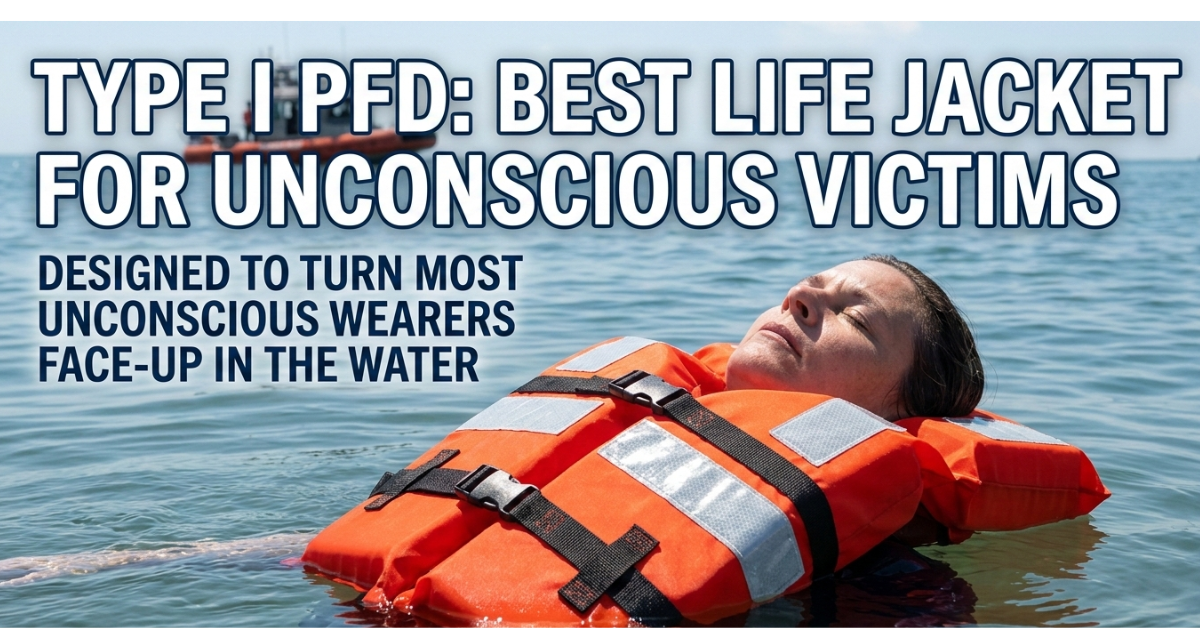
If someone falls into the water and loses consciousness, survival depends on one critical factor: keeping the airway above water. That’s why many people ask, which type of PFD will turn most unconscious people face up in the water?
The answer is clear and backed by safety standards: a Type I PFD (Offshore Life Jacket). In this guide, you’ll learn why Type I PFDs are designed for this lifesaving function, how they compare to other personal flotation devices, and how to choose the right life jacket for real-world safety.
Which Type of PFD Will Turn Most Unconscious People Face Up in the Water?
Why Type I Works Best
-
Highest buoyancy (typically 22+ pounds of flotation)
-
Large flotation collar to support the head and neck
-
Designed for rough or open water
-
Keeps the mouth and nose clear of waves
-
Highly visible colors for rescue
This design shifts the wearer’s center of buoyancy so the body naturally rotates onto its back—something other PFD types are not reliably built to do.
Best for:
-
Offshore boating
-
Open ocean fishing
-
Commercial marine work
-
Emergency preparedness
Understanding PFD Types (Quick Comparison)
I – Offshore Life Jacket (Best for unconscious victims)
-
Turns most unconscious people face up
-
Maximum buoyancy
-
Works in rough, remote waters
II – Near-Shore Buoyant Vest
-
May turn some unconscious wearers face up
-
Less buoyancy than Type I
-
Suitable for calm inland waters
III – Flotation Aid
-
Designed for comfort and mobility
-
Will NOT reliably turn an unconscious person face up
-
Common for kayaking, water sports
IV – Throwable Device
-
Not wearable (ring buoy, cushion)
-
For conscious users only
V – Special-Use Device
-
Designed for specific activities (inflatable, sailing, etc.)
-
Only works as intended when worn properly
Bottom line: If your priority is unconscious survival, Type I is the safest choice.
How Type I PFDs Turn the Body Face Up
The science behind it is simple but effective:
-
High chest flotation lifts the upper body.
-
Large head collar supports the neck and prevents forward tilt.
-
Back flotation distribution shifts body balance.
-
Automatic rotation occurs due to buoyancy positioning.
This design helps keep the airway clear even if the wearer is injured, exhausted, or unconscious.
When You Should Choose a Type I PFD
Choose a Type I life jacket if you:
-
Boat in open or rough water
-
Travel far from shore
-
Operate commercial or fishing vessels
-
Want maximum safety for children or non-swimmers
-
Prepare for emergency or survival situations
If comfort is your only priority, Type III might feel better—but if survival is the goal, Type I wins every time.
Key Features to Look For in a Type I Life Jacket
When shopping, check for:
-
Coast Guard approval
-
Minimum 22 lbs buoyancy
-
Bright orange or yellow color
-
Reflective tape and whistle
-
Proper size for body weight and chest measurement
Fit matters. A loose life jacket won’t rotate your body correctly.
FAQs
1. Which type of PFD is required for offshore boating?
Type I PFD is recommended and often required because it provides the highest buoyancy and turning capability.
2. Will a Type II PFD turn an unconscious person face up?
Sometimes, but not reliably. Type I is the safest option for this purpose.
3. Are inflatable life jackets safe for unconscious victims?
Only certain Type V inflatable PFDs with automatic inflation may help, but they’re not as reliable as a Type I offshore jacket.
4. What is the most comfortable life jacket?
Type III is usually the most comfortable, but it sacrifices unconscious-turning ability.
5. Do children need Type I PFDs?
For maximum safety—especially in open water—yes, a properly sized Type I is the safest choice.
Conclusion
If you’re asking which type of PFD will turn most unconscious people face up in the water, the answer is straightforward: Type I Offshore Life Jacket. It offers the highest buoyancy, head support, and the best chance of keeping an unconscious person’s airway above water.
Comfort matters—but survival matters more. If you boat in open water, travel far from shore, or want the highest level of protection, investing in a Type I PFD is the smart move.