
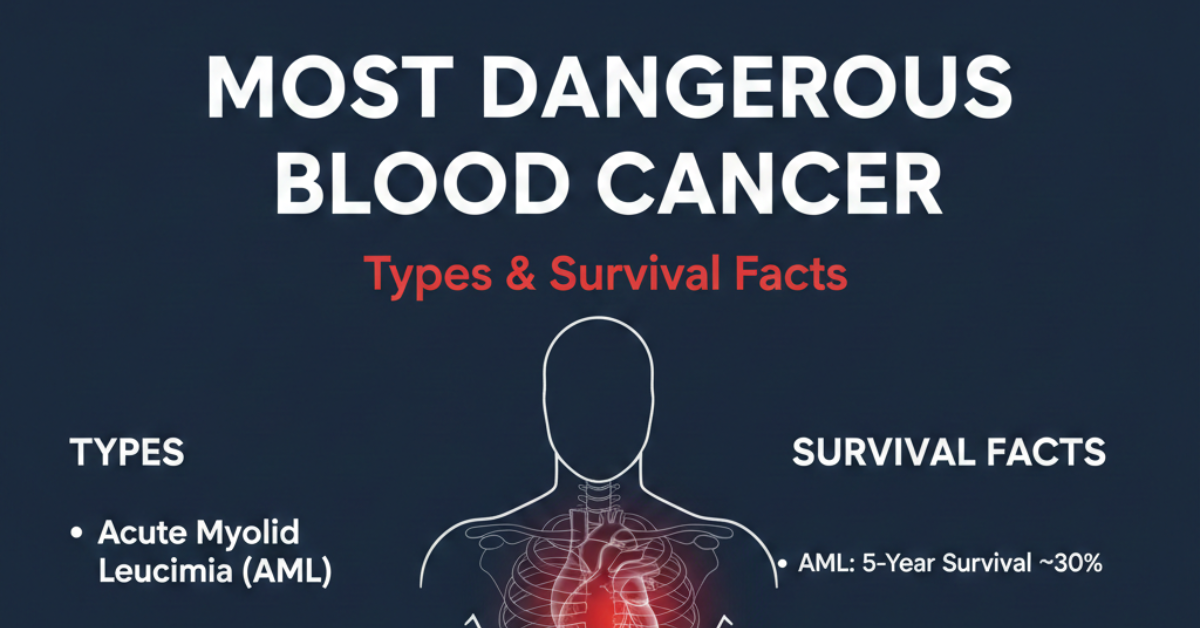
A blood cancer diagnosis can feel overwhelming—but not all blood cancers behave the same way. Some grow slowly for years, while others move fast and require urgent treatment. If you’re wondering which type of blood cancer is most dangerous, the short answer is: acute leukemias—especially Acute Myeloid Leukemia (AML)—are generally considered the most aggressive.
In this guide, we’ll break down the most dangerous blood cancers, what makes them high-risk, and what factors really determine outcomes. The goal isn’t to scare you—it’s to give you clear, useful information you can actually understand.
Understanding Blood Cancer: The Basics
Blood cancers affect how your body produces and uses blood cells. They typically start in the bone marrow or lymphatic system and fall into three main categories:
-
Leukemia – cancer of blood-forming tissues
-
Lymphoma – cancer of the lymphatic system
-
Multiple myeloma – cancer of plasma cells
Each category includes both slow-growing (chronic) and fast-growing (acute or aggressive) types. The speed of progression is a major factor in determining which type of blood cancer is most dangerous.
The Most Dangerous Blood Cancers (Ranked by Aggressiveness)
1. Acute Myeloid Leukemia (AML) – Often the Most Dangerous
AML is widely considered one of the most aggressive and life-threatening blood cancers.
Why AML is high-risk:
-
Progresses rapidly—sometimes within weeks
-
Crowds out healthy blood cells quickly
-
Higher mortality rate, especially in older adults
-
Requires immediate intensive treatment (chemotherapy or stem cell transplant)
Common symptoms:
-
Severe fatigue
-
Frequent infections
-
Easy bruising or bleeding
-
Shortness of breath
Without prompt treatment, AML can become life-threatening very quickly, which is why it’s often cited when asking which type of blood cancer is most dangerous.
2. Acute Lymphoblastic Leukemia (ALL)
ALL is another fast-growing leukemia. It’s aggressive but highly treatable, especially in children.
Risk factors that increase danger:
-
Diagnosis in older adults
-
Certain genetic mutations
-
Delayed treatment
Children often have excellent outcomes, but adult cases can be more challenging.
3. Aggressive Non-Hodgkin Lymphoma
Some lymphomas grow slowly, but aggressive forms—like Diffuse Large B-Cell Lymphoma (DLBCL)—require urgent care.
Why it’s dangerous:
-
Rapid tumor growth
-
Can spread quickly to organs
-
Life-threatening if untreated
The good news: many aggressive lymphomas respond well to modern therapy.
4. Multiple Myeloma
Multiple myeloma is usually slower than acute leukemias but can still be serious.
Complications include:
-
Bone damage and fractures
-
Kidney failure
-
Severe infections
-
Anemia
While often manageable for years, advanced cases can become life-threatening.
What Actually Makes a Blood Cancer “Dangerous”?
The type matters—but it’s not the whole story. Doctors assess risk based on:
Disease Factors
-
Acute vs. chronic (speed of progression)
-
Genetic mutations
-
Cancer stage and spread
Patient Factors
-
Age and overall health
-
Response to treatment
-
Access to specialized care
Important reality check:
Some chronic blood cancers (like Chronic Lymphocytic Leukemia) may never need treatment, while an acute leukemia always requires urgent care.
Survival Rates: Context Matters
Survival statistics vary widely depending on age, genetics, and treatment advances.
General trends:
-
AML: Lower survival rates, especially over age 60
-
ALL: High survival in children, moderate in adults
-
Aggressive lymphoma: Often curable with treatment
-
Multiple myeloma: Treatable but usually not curable
Medical progress has improved outcomes significantly in the last decade, especially with targeted therapies and immunotherapy.
Warning Signs You Shouldn’t Ignore
Early detection improves outcomes for aggressive blood cancers. Watch for:
-
Persistent fatigue
-
Frequent infections
-
Unexplained bruising or bleeding
-
Night sweats or fever
-
Swollen lymph nodes
-
Bone pain
-
Unexplained weight loss
If symptoms persist for more than two weeks, a medical checkup is worth it.
Treatment Options for High-Risk Blood Cancers
Treatment depends on the specific diagnosis but may include:
-
Chemotherapy
-
Targeted therapy
-
Immunotherapy
-
Stem cell (bone marrow) transplant
-
CAR-T cell therapy (for certain cases)
Early, aggressive treatment often makes the biggest difference for the most dangerous blood cancers.
FAQs About the Most Dangerous Blood Cancer
Q1: Which blood cancer has the lowest survival rate?
Acute Myeloid Leukemia (AML), especially in older adults, generally has the lowest survival rates.
Q2: Is leukemia more dangerous than lymphoma?
Acute leukemias are typically more dangerous than most lymphomas because they progress faster.
Q3: Can aggressive blood cancers be cured?
Yes. Many cases of ALL and aggressive lymphomas are curable with early treatment.
Q4: Which blood cancer spreads the fastest?
Acute leukemias (AML and ALL) spread the fastest and require immediate medical attention.
Q5: Are blood cancers always fatal?
No. Many blood cancers are treatable, and survival rates continue to improve with modern therapies.
Conclusion: The Real Answer to “Which Type of Blood Cancer Is Most Dangerous?”
If you’re looking for a single answer, Acute Myeloid Leukemia (AML) is generally considered the most dangerous due to its rapid progression and treatment challenges.
But here’s the bigger truth: danger depends on how fast the cancer grows, the patient’s health, and how quickly treatment begins. Early diagnosis and modern therapies have dramatically improved outcomes—even for aggressive cancers.
If this topic concerns you or someone you love, the best next step is simple: don’t ignore symptoms and consult a healthcare professional early. Knowledge helps—but timely action saves lives.