You’re behind the wheel, the road looks clear, and suddenly your mind drifts—to work, a conversation, or tomorrow’s plans. It feels harmless, but this moment of mental wandering can be dangerous. Daydreaming while driving is an example of a cognitive distraction—and it’s one of the most overlooked causes of road accidents.
In this guide, we’ll break down what type of distraction daydreaming falls under, why it’s risky, and how to keep your mind focused on the road.
What Are the Four Types of Driving Distractions?
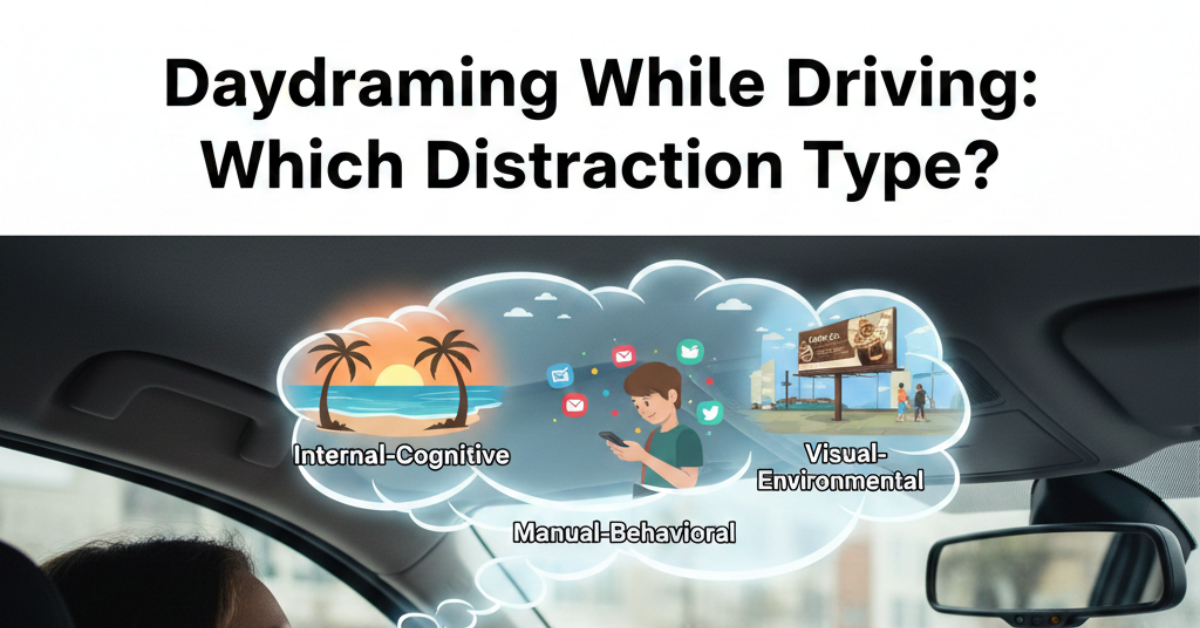
To understand the answer to “daydreaming while driving is an example of which type of distraction?”, you need to know the four main categories of driver distraction:
-
Visual distraction – Taking your eyes off the road
Example: Looking at your phone or a billboard. -
Manual distraction – Taking your hands off the wheel
Example: Eating, adjusting the radio, or texting. -
Auditory distraction – Being distracted by sounds
Example: Loud conversations or notifications. -
Cognitive distraction – Taking your mind off driving
Example: Daydreaming, deep thinking, emotional stress.
Daydreaming falls into the cognitive distraction category because your attention shifts away from the driving task—even if your eyes are on the road and your hands are on the wheel.
Why Cognitive Distraction Is More Dangerous Than You Think
Many drivers assume they’re safe as long as they’re looking ahead. But driving is a mental task, not just a physical one.
When you’re cognitively distracted:
-
Your reaction time slows
-
You may miss traffic signs or signals
-
You become less aware of hazards
-
You experience “highway hypnosis” (driving without conscious awareness)
Studies from the National Highway Traffic Safety Administration (NHTSA) show that mental distraction significantly increases crash risk because your brain isn’t actively processing the driving environment.
Common Causes of Daydreaming While Driving
Daydreaming doesn’t just happen randomly. It’s usually triggered by:
-
Long, monotonous highway driving
-
Fatigue or lack of sleep
-
Stress, anxiety, or emotional issues
-
Familiar routes driven daily
-
Listening to overly relaxing music or podcasts
If you’ve ever arrived somewhere and barely remembered the trip, you’ve experienced cognitive disengagement.
Signs You’re Mentally Distracted Behind the Wheel
Watch for these warning signs:
-
Missing exits or turns
-
Driving at inconsistent speeds
-
Not remembering the last few miles
-
Delayed reactions to traffic changes
-
Drifting within your lane
These are clear indicators that your mind—not your body—is off the road.
How to Stay Mentally Focused While Driving
Here are practical ways to prevent daydreaming and maintain attention:
1. Stay Physically Alert
-
Get enough sleep before driving
-
Take breaks every 2 hours on long trips
-
Keep the cabin cool and well-ventilated
2. Engage Your Mind
-
Practice active scanning (mirrors, road signs, surroundings)
-
Narrate your driving mentally (e.g., “car slowing ahead”)
-
Listen to engaging—but not distracting—audio
3. Manage Stress Before Driving
-
Avoid driving immediately after emotional events
-
Use breathing techniques if your mind starts wandering
4. Avoid Autopilot Mode
Familiar routes are the biggest trap. Stay intentional, even on daily commutes.
The Real Risk: “Inattention Blindness”
Cognitive distraction can cause inattention blindness—a condition where your eyes see something, but your brain doesn’t process it.
That’s why drivers sometimes say:
“I didn’t even see the car/pedestrian.”
Their eyes were forward—but their mind was elsewhere.
FAQs
Q1: Daydreaming while driving is an example of which type of distraction?
It is a cognitive distraction, where your mental focus shifts away from the driving task.
Q2: Is cognitive distraction more dangerous than texting?
Texting is dangerous because it combines visual, manual, and cognitive distraction. However, cognitive distraction alone is still a major crash risk.
Q3: What is highway hypnosis?
It’s a state of reduced awareness during long, repetitive driving, often linked to daydreaming and mental fatigue.
Q4: How can I tell if I’m cognitively distracted?
If you miss exits, forget parts of your trip, or react slowly to traffic, your attention isn’t fully engaged.
Q5: Does listening to music cause cognitive distraction?
It can, especially if it’s overly relaxing, emotional, or requires deep focus.
Conclusion: Keep Your Mind in the Driver’s Seat
So, to answer the key question clearly: daydreaming while driving is a cognitive distraction—and it’s more dangerous than most people realize. Safe driving isn’t just about where your eyes are or where your hands go. It’s about where your attention lives.
The next time your mind starts to wander, bring it back intentionally. Stay alert, stay engaged, and treat mental focus as your most important safety tool.