What’s it really like inside the mind of someone living with bipolar disorder? The answer isn’t simple—because how a person with bipolar thinks can shift dramatically depending on their mood state. One day, thoughts may race with confidence and big ideas. Another day, the same person may feel weighed down by doubt, guilt, or exhaustion.
This article breaks down the thoughts how a person with bipolar thinks, how thinking patterns change during different phases, and how a person with bipolar thinks in relationships—all explained in a clear, practical way.
What Is Bipolar Disorder? (Quick Context)
Bipolar disorder is a mood condition marked by episodes of:
-
Mania or hypomania (elevated or energized mood)
-
Depression (low mood and reduced energy)
-
Sometimes mixed states (high energy with negative thoughts)
These mood changes don’t just affect feelings—they strongly influence thinking patterns, decision-making, and perception.
How a Person with Bipolar Thinks During Mania
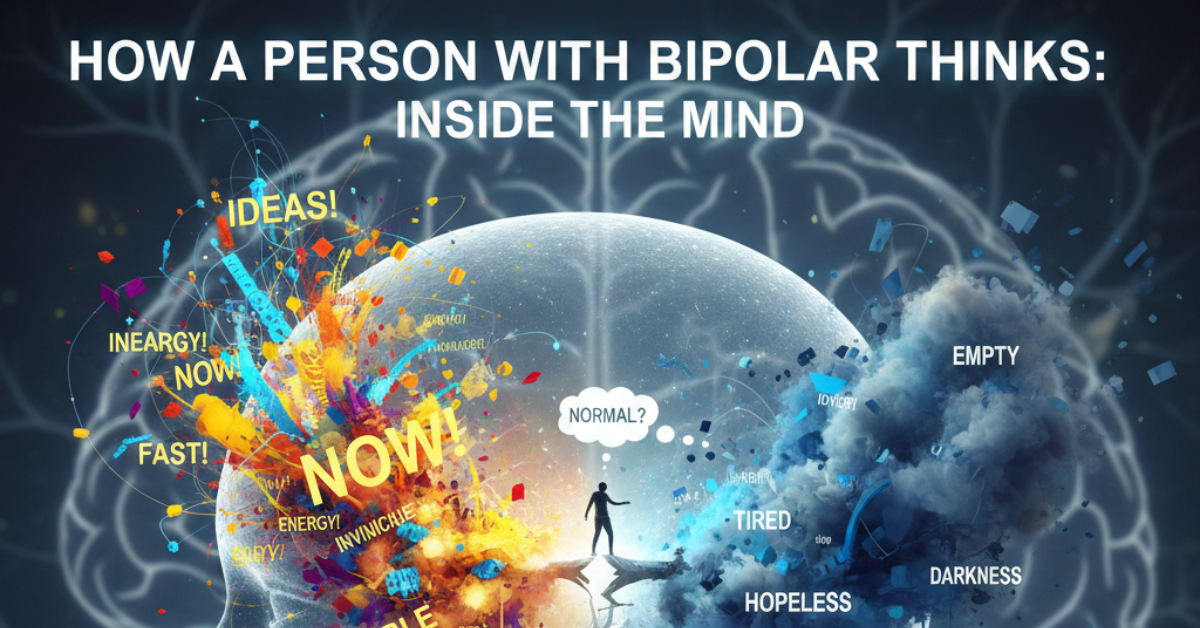
During manic or hypomanic phases, thinking often becomes fast, optimistic, and expansive.
Common manic thought patterns
-
“I can do anything.”
-
“I don’t need sleep.”
-
“This idea will change everything.”
-
“Rules don’t apply to me.”
Key mental characteristics
-
Racing thoughts – ideas jump quickly from one to another
-
Increased confidence or grandiosity
-
Risk underestimation (spending, impulsive decisions)
-
High creativity and productivity (sometimes)
What it feels like internally
Many people describe it as:
-
A mental “fast-forward”
-
Heightened clarity or brilliance
-
Feeling unstoppable
The downside? Judgment may weaken, and consequences feel distant or unimportant.
How a Person with Bipolar Thinks During Depression
When mood shifts downward, thinking often slows and becomes negative or self-critical.
Common depressive thoughts
-
“I’m a burden.”
-
“Nothing will get better.”
-
“I can’t handle anything.”
-
“What’s the point?”
Mental patterns during bipolar depression
-
Low self-worth
-
Difficulty concentrating
-
Decision paralysis
-
Catastrophic thinking
-
Hopelessness or guilt
This phase often feels like mental fog, where even simple tasks require significant effort.
Mixed States: When Thoughts Conflict
Sometimes, bipolar disorder creates a difficult combination:
-
High energy
-
Negative or anxious thoughts
This can feel like:
-
Racing thoughts focused on fear or failure
-
Agitation or irritability
-
Feeling “wired but miserable”
Mixed states are often the most emotionally intense and confusing.
How a Person with Bipolar Thinks in Relationships
Relationships are deeply affected by shifting thought patterns.
During manic phases
A person may think:
-
“This relationship is perfect.”
-
“Let’s move fast—big plans, big decisions.”
-
Increased affection or intensity
-
Impulsive actions (spending, sudden commitments)
During depressive phases
Thoughts may flip to:
-
“They’d be better off without me.”
-
“I’m not lovable.”
-
Withdrawal or emotional distance
Common relationship challenges
-
Emotional inconsistency
-
Misunderstandings about mood-driven behavior
-
Guilt after manic decisions
-
Fear of abandonment during depressive episodes
With treatment and communication, many people with bipolar disorder maintain healthy, stable relationships.
Everyday Thinking Patterns Between Episodes
When mood is stable (euthymia), many people think and function like anyone else. However, some ongoing patterns may include:
-
Increased self-monitoring of mood and energy
-
Concern about future episodes
-
Greater awareness of sleep, stress, and routine
-
Reflecting on past manic or depressive decisions
This awareness often becomes a strength over time.
What Influences Bipolar Thinking?
Several factors shape how a person with bipolar thinks day to day:
Biological
-
Brain chemistry changes
-
Sleep patterns
-
Medication effects
Psychological
-
Stress levels
-
Coping skills
-
Past experiences
Lifestyle
-
Routine and structure
-
Substance use
-
Support system
Stability often improves with:
-
Consistent sleep
-
Medication (if prescribed)
-
Therapy (such as CBT or psychoeducation)
Strengths Often Overlooked
While bipolar disorder presents real challenges, many individuals also report:
-
High creativity
-
Emotional depth
-
Strong empathy
-
Big-picture thinking
-
Resilience and self-awareness
The goal of treatment isn’t to erase personality—it’s to stabilize the extremes.
FAQs
How does bipolar disorder affect thinking daily?
Thinking can vary widely. During stable periods, thinking is typical. During episodes, thoughts may become either overly fast and confident (mania) or slow and negative (depression).
Do people with bipolar know when their thinking changes?
Sometimes yes, especially with experience and treatment. Early warning signs often include sleep changes, racing thoughts, or increasing pessimism.
How a person with bipolar thinks in relationships?
Thought patterns may shift between intense closeness (during mania) and withdrawal or insecurity (during depression). Communication and treatment help maintain stability.
Can bipolar thinking be controlled?
While mood episodes can’t be fully controlled by willpower, treatment, routine, sleep, therapy, and medication significantly improve stability.
Is bipolar disorder just mood swings?
No. It affects energy, thinking, judgment, sleep, and behavior, not just emotions.
Conclusion: Understanding the Mind Behind Bipolar
Understanding how a person with bipolar thinks helps replace judgment with empathy. Their thought patterns aren’t random or dramatic by choice—they reflect real neurological mood shifts that influence perception, confidence, and self-worth.
With proper treatment, structure, and support, most people with bipolar disorder lead productive, meaningful lives. If you’re learning about this for yourself or someone close to you, the next step is simple: keep learning, encourage professional support, and focus on stability—not perfection.