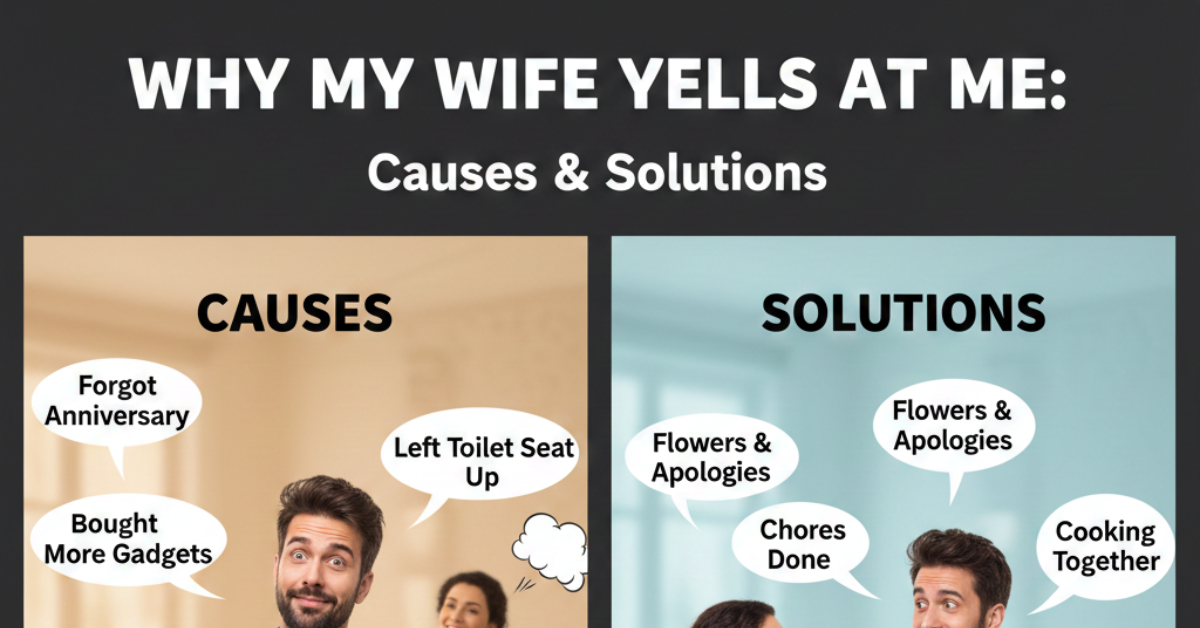
If you’ve ever found yourself thinking, “Why does my wife yell at me?”, you’re not alone. Many husbands experience this and feel confused, hurt, or even defensive. But yelling in a relationship rarely comes out of nowhere. It’s usually a signal — not just anger, but frustration, unmet needs, or emotional overload.
This article breaks down the real reasons why your wife yells at you, what it actually means beneath the surface, and practical steps you can take to improve communication and reduce conflict. The goal isn’t to assign blame — it’s to help you understand what’s really happening and fix the pattern.
The Real Reasons Your Wife Yells at You
1. She Feels Unheard or Ignored
One of the most common reasons for yelling is simple: she doesn’t feel listened to.
When someone repeats the same concern multiple times without seeing change, their tone often escalates. Yelling becomes a last attempt to be taken seriously.
Signs this might be happening:
-
She says, “I’ve told you this before.”
-
Arguments repeat about the same issues.
-
She complains you don’t listen or forget things.
What it really means:
“I don’t feel important enough to be heard.”
2. Emotional Overload and Stress
Sometimes the yelling isn’t about you — it’s about everything.
Work pressure, household responsibilities, parenting, finances, or mental fatigue can push anyone to their emotional limit. When stress builds up, small issues trigger big reactions.
Common stress triggers:
-
Feeling overwhelmed with responsibilities
-
Lack of personal time
-
Mental exhaustion
-
Feeling unsupported
3. Resentment Has Built Up Over Time
Yelling often comes from unresolved resentment. Small disappointments that weren’t addressed early can pile up until they explode.
Examples:
-
Unequal household effort
-
Broken promises
-
Feeling taken for granted
-
Lack of appreciation
When resentment grows, even minor situations feel like “the final straw.”
4. Communication Styles Don’t Match
Some people naturally raise their voice when emotional. Others shut down. If your communication styles clash, conflicts escalate quickly.
Common patterns:
-
One partner talks louder, the other withdraws
-
Defensive responses trigger more yelling
-
Arguments turn into blame cycles
This isn’t about who’s right — it’s about how you both communicate under stress.
5. She Doesn’t Feel Emotionally Connected
When emotional connection drops, frustration rises.
If quality time, affection, or attention has decreased, yelling may be an expression of emotional distance.
Possible signs:
-
Complaints about you being distracted or distant
-
Fewer positive interactions
-
More criticism or irritability
Translation:
“I miss feeling close to you.”
What Not to Do When Your Wife Yells
Most men react in ways that make the situation worse.
Avoid:
-
Yelling back
-
Walking away mid-conversation
-
Saying “Calm down” (this escalates things)
-
Getting defensive immediately
-
Ignoring the issue afterward
These responses confirm her fear: that she’s not being heard.
What To Do Instead (Practical Solutions)
1. Listen Without Interrupting
When she’s upset, your first job isn’t to defend yourself — it’s to understand.
Try this:
-
Maintain eye contact
-
Let her finish
-
Say: “I hear you. Tell me more.”
This alone can lower emotional intensity.
2. Validate Her Feelings
Validation doesn’t mean you agree. It means you acknowledge her emotions.
Examples:
-
“I can see why that upset you.”
-
“That makes sense.”
-
“I didn’t realize you felt that way.”
This builds emotional safety.
3. Ask One Powerful Question
Instead of arguing facts, ask:
“What would make this better for you?”
It shifts the conversation from blame to solutions.
4. Take Ownership Where It’s True
If there’s something you’ve overlooked, own it.
Simple accountability:
-
“You’re right, I’ve been distracted lately.”
-
“I should have followed through.”
-
“I’ll fix that.”
Responsibility reduces conflict faster than any argument.
5. Improve the Relationship Outside Conflict
Most yelling problems are relationship problems, not single-argument problems.
Focus on:
-
Regular quality time
-
Appreciation and compliments
-
Helping without being asked
-
Checking in emotionally
Small daily actions prevent big emotional explosions.
When Yelling Becomes a Bigger Problem
If yelling includes:
-
Constant criticism
-
Insults or name-calling
-
Emotional manipulation
-
Frequent intense fights
Then it may be time for marriage counseling or relationship coaching.
Healthy relationships address conflict without emotional harm.
FAQs About Why Your Wife Yells
Q1: Is it normal for my wife to yell at me?
Occasional raised voices happen in most relationships. Frequent yelling usually signals unresolved emotional needs or communication problems.
Q2: Why does my wife yell even when I didn’t do anything wrong?
She may be reacting to accumulated frustration, stress, or past issues rather than the current situation.
Q3: Should I ignore her when she yells?
No. Ignoring makes things worse. Stay calm, listen, and address the concern later if emotions are too high.
Q4: Does yelling mean she doesn’t respect me?
Not necessarily. Often it means she feels unheard, overwhelmed, or disconnected.
Q5: How can I stop the yelling in my marriage?
Improve communication, listen actively, validate feelings, and address problems early before frustration builds.
Conclusion: What This Really Comes Down To
If you’re asking, “Why does my wife yell at me?”, the honest answer is this: yelling is usually a signal of frustration, stress, or emotional disconnection — not just anger.
Instead of focusing on the volume, focus on the message underneath. When you listen better, take responsibility where needed, and invest in the relationship daily, the yelling often fades on its own.
Strong marriages aren’t built by winning arguments — they’re built by understanding each other.
Next step:
Consider exploring related topics like communication skills for couples, emotional intelligence in marriage, or conflict resolution strategies to strengthen your relationship long-term.