Ever peeled at dried liquid bandage and instantly regretted it? You’re not alone. Liquid bandage is fantastic for sealing small cuts, but when it’s time to take it off, things can get tricky.
If you’re searching for how to remove liquid bandage safely — especially without irritating your skin or pulling hair — this guide walks you through it step by step. We’ll also cover how to remove liquid bandage from hair, which requires a slightly different approach.
Let’s do this the right way.
What Is Liquid Bandage and Why Is It Hard to Remove?
Liquid bandage is a topical adhesive made from medical-grade polymers. When applied, it dries into a thin, flexible, waterproof layer that protects minor cuts and scrapes.
That strong seal is great for healing — but not so great when you try to rip it off too soon.
Here’s why removal can be difficult:
-
It bonds tightly to skin
-
It’s water-resistant
-
It stretches with movement
-
It can cling to fine hair
The key is patience and using the right method.
How to Remove Liquid Bandage Safely
Before you start, ask yourself: Does it really need to come off?
In most cases, liquid bandage naturally wears off in 5–10 days as skin sheds. If it’s not causing irritation, you can let it fall off on its own.
If you do need to remove it, follow these steps.
Method 1: Warm Soapy Water (Best First Option)
This is the safest and gentlest approach.
Steps:
-
Fill a bowl with warm (not hot) water.
-
Add mild soap.
-
Soak the area for 10–15 minutes.
-
Gently rub with a soft cloth.
-
Pat dry.
Warm water softens the polymer layer, making removal easier without damaging healing skin.
Ideal for: Sensitive skin, children, facial areas.
Method 2: Petroleum Jelly or Oil
Oils help break down adhesive bonds.
Use:
-
Petroleum jelly (Vaseline)
-
Coconut oil
-
Olive oil
-
Baby oil
How to apply:
-
Rub a generous amount over the liquid bandage.
-
Let it sit for 10–20 minutes.
-
Gently massage in circular motions.
-
Wipe away with a soft cloth.
This method works especially well if the bandage is thick or layered.
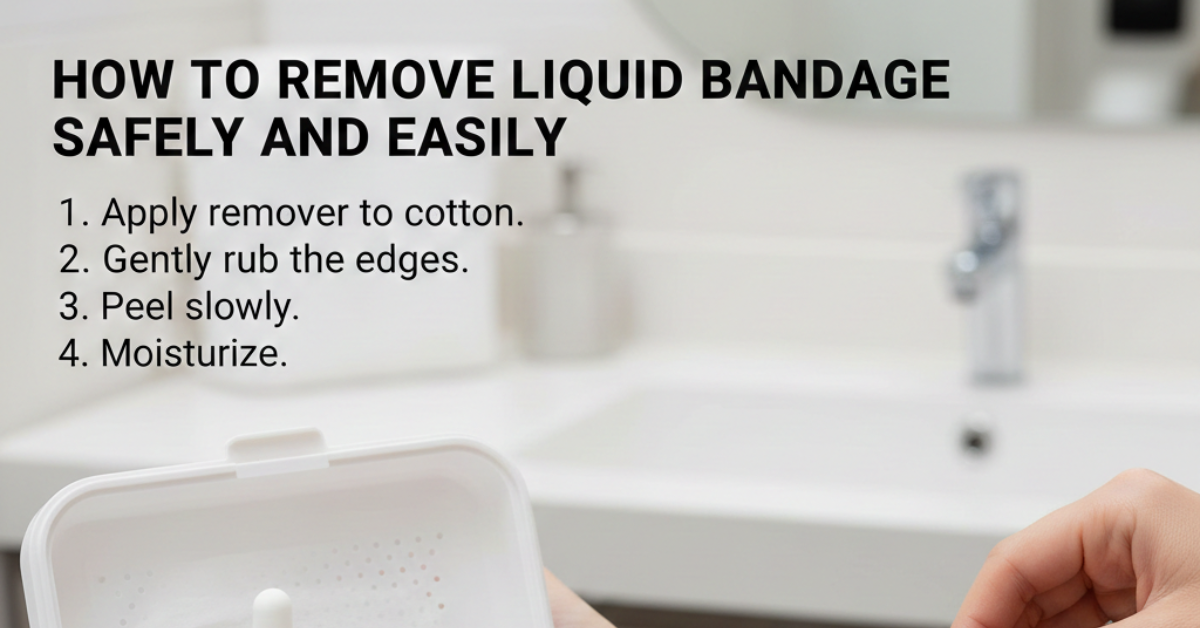
Method 3: Rubbing Alcohol (Use With Caution)
Isopropyl alcohol can dissolve the adhesive — but it may sting.
Steps:
-
Soak a cotton pad in rubbing alcohol.
-
Dab lightly (don’t scrub aggressively).
-
Wait 1–2 minutes.
-
Gently peel if it loosens.
Avoid using alcohol on open wounds or sensitive areas. It can delay healing and cause irritation.
For safety guidelines, you can reference trusted sources like:
-
Mayo Clinic (mayoclinic.org)
-
Cleveland Clinic (clevelandclinic.org)
These would be ideal external link placements for wound care advice.
How to Remove Liquid Bandage from Hair
This is where most people panic. Liquid bandage stuck in hair can feel like glue.
Don’t pull it.
Here’s how to remove liquid bandage from hair safely:
Step-by-Step Hair Removal Method
-
Apply oil generously (coconut oil or olive oil works best).
-
Massage gently into the affected hair.
-
Let it sit for 20–30 minutes.
-
Use a wide-tooth comb to slowly separate strands.
-
Wash with warm water and shampoo.
If it’s a small clump, trimming may be easier — but only as a last resort.
Avoid acetone or nail polish remover on the scalp. It can irritate skin and damage hair follicles.
What NOT to Do
If you want clean removal without setbacks, avoid these mistakes:
-
Don’t rip it off dry
-
Don’t use sharp tools
-
Don’t scrub aggressively
-
Don’t use harsh chemicals on healing skin
You’ll risk reopening the wound.
When You Should Leave It Alone
Sometimes the best solution is no action.
Let the liquid bandage stay if:
-
The wound is still healing
-
There’s no itching or redness
-
It’s not peeling awkwardly
The protective layer falls off naturally as your skin regenerates.
Signs You Should See a Doctor
Remove the bandage and seek medical care if you notice:
-
Redness spreading beyond the wound
-
Swelling or pus
-
Severe pain
-
Signs of infection
Liquid bandage is for minor cuts only. Deep wounds need professional care.
Frequently Asked Questions (FAQs)
How long does liquid bandage last?
Typically 5 to 10 days. It naturally flakes off as skin sheds.
Can I peel off liquid bandage?
You can — but only after softening it. Dry peeling can reopen the wound.
Does acetone remove liquid bandage?
Yes, but it’s harsh. Use oil or warm water first. Reserve acetone for extreme cases and avoid sensitive areas.
Is it safe to remove liquid bandage early?
Only if the wound has closed. Removing it too soon may delay healing.
How to remove liquid bandage from hair without cutting it?
Use oil, let it soak, gently comb it out, then shampoo. Never pull it dry.
Conclusion: Remove Liquid Bandage the Smart Way
Knowing how to remove liquid bandage properly prevents irritation, scarring, and unnecessary pain. Start with warm water or oil, avoid harsh pulling, and let the wound heal first. And if you’re dealing with hair? Oil is your best friend — patience comes second.
Smart removal protects your skin and speeds recovery. If you found this helpful, explore more first-aid guides and build a simple, effective home care routine. Your skin heals better when you treat it right.