
The first time your baby rolls over, it feels like a small miracle. One moment they’re stuck on their back, and the next—they’ve flipped like they’ve been practicing in secret. If you’re wondering when do babies roll over, you’re not alone. This milestone is one of the most searched questions new parents ask, and for good reason.
In this guide, we’ll break down when babies typically roll over, what’s considered normal, the difference between rolling directions, and how you can support your baby’s development without rushing it.
When Do Babies Roll Over?
Most babies start rolling over between 3 and 6 months, but the exact timing varies. Some babies roll early, others take their time—and both can be completely normal.
Here’s the key thing parents miss: rolling is a skill that develops in stages, not a single moment.
Typical Rolling Timeline at a Glance
-
3–4 months: Early rolling attempts (usually belly to back)
-
4–6 months: Stronger, more consistent rolling in both directions
-
6–7 months: Confident rolling with control
If your baby isn’t rolling by the exact month listed online, don’t panic. Development isn’t a race.
When Do Babies Roll Over From Belly to Back?
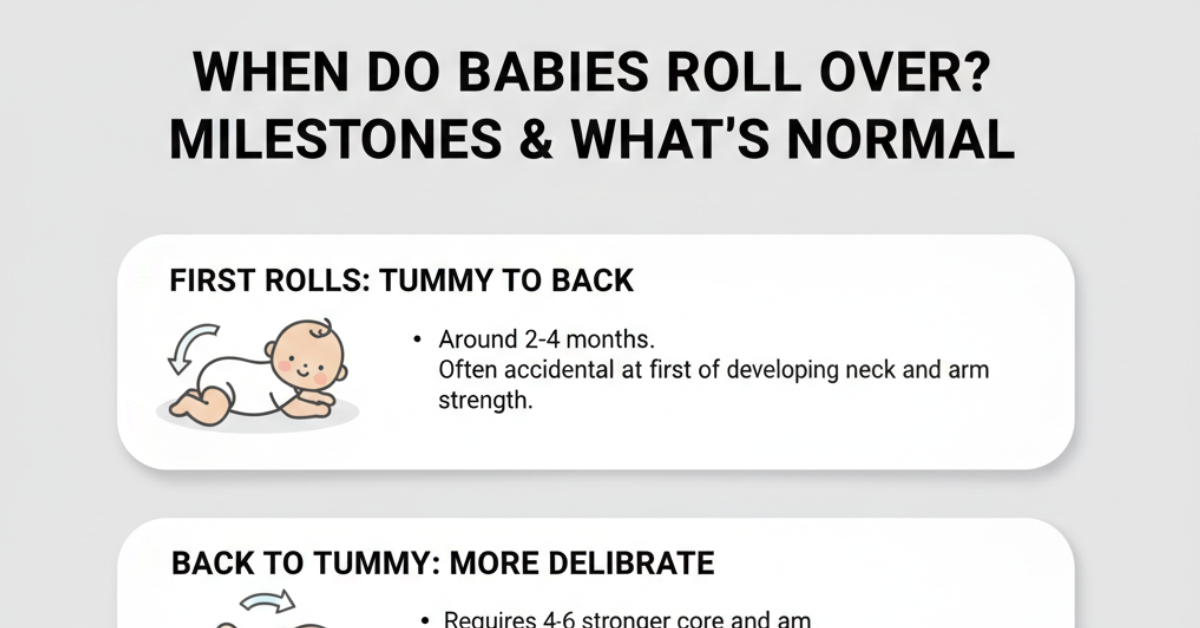
Babies usually roll from tummy to back first, often between 3 and 4 months.
Why this direction comes first:
-
Gravity helps
-
It requires less core strength
-
Babies often dislike tummy time and instinctively roll out of it
Signs Your Baby Is Close to Rolling Belly to Back
-
Lifting their head during tummy time
-
Shifting weight onto one arm
-
Twisting their torso or kicking one leg
This early roll can look accidental—and sometimes it is. That still counts.
When Do Babies Roll Over From Back to Tummy?
Rolling from back to tummy is harder and usually happens later, around 5 to 6 months.
This movement requires:
-
Strong neck control
-
Core and hip strength
-
Coordination between arms and legs
Because it’s more demanding, this milestone is a better indicator of overall motor development.
If your baby suddenly starts rolling back to belly at night, welcome to the phase where sleep gets… interesting.
When Do Babies Roll Over Back to Belly vs. Tummy to Back?
Here’s a simple comparison most parents find helpful:
| Rolling Direction | Typical Age Range |
| Tummy to back | 3–4 months |
| Back to tummy | 5–6 months |
| Both directions consistently | By 6 months |
Some babies skip one direction entirely and still develop normally.
Factors That Affect When Babies Roll Over
Not all babies roll at the same pace. Several factors influence timing:
-
Muscle tone and strength
-
Amount of tummy time
-
Premature birth
-
Baby’s temperament
-
Opportunities for floor play
Babies who spend more time on the floor (not in swings or seats) often roll sooner.
How to Help Your Baby Learn to Roll Over
You don’t need fancy equipment. You need consistency.
Practical Ways to Encourage Rolling
-
Do tummy time daily (multiple short sessions)
-
Place toys just out of reach
-
Let your baby play on a firm, safe surface
-
Roll them gently to show the motion
What not to do:
-
Don’t force the movement
-
Don’t compare your baby to others
-
Don’t panic-scroll milestone charts at 2 a.m.
Is It Normal If My Baby Hasn’t Rolled Over Yet?
Yes—up to a point.
Most pediatricians consider it normal if:
-
Your baby is under 6 months and not rolling yet
-
They show good head control
-
They move arms and legs actively
When to Talk to a Pediatrician
Reach out if:
-
No rolling attempts by 6–7 months
-
Very stiff or very floppy muscles
-
Limited movement on one side of the body
Early checks don’t mean something is wrong. They mean you’re paying attention.
Rolling Over and Sleep Safety
Once babies can roll, parents worry about sleep—and rightly so.
Key safety rules:
-
Always place your baby on their back to sleep
-
If they roll on their own, you don’t need to flip them back
-
Stop swaddling as soon as rolling begins
A rolling baby is a sign of growing strength, not danger—when safe sleep rules are followed.
FAQs: When Do Babies Roll Over?
When do babies roll over for the first time?
Most babies roll over for the first time between 3 and 6 months, often starting with tummy to back.
When do babies roll over from tummy to back?
Typically around 3–4 months, sometimes earlier during tummy time.
When do babies roll over from back to tummy?
Usually between 5–6 months, as it requires more strength and coordination.
Should I worry if my baby rolls late?
Not unless there are other developmental concerns. Late rolling alone is rarely a problem.
Can babies skip rolling over?
Yes. Some babies move straight to sitting or crawling and still develop normally.
Conclusion
So, when do babies roll over? For most, it happens sometime between 3 and 6 months, starting with tummy to back and followed by back to belly. The timeline matters less than steady progress and strength development. Your job isn’t to rush milestones—it’s to provide space, time, and encouragement. If you want to go deeper, explore related guides on tummy time, crawling milestones, or safe sleep practices.