
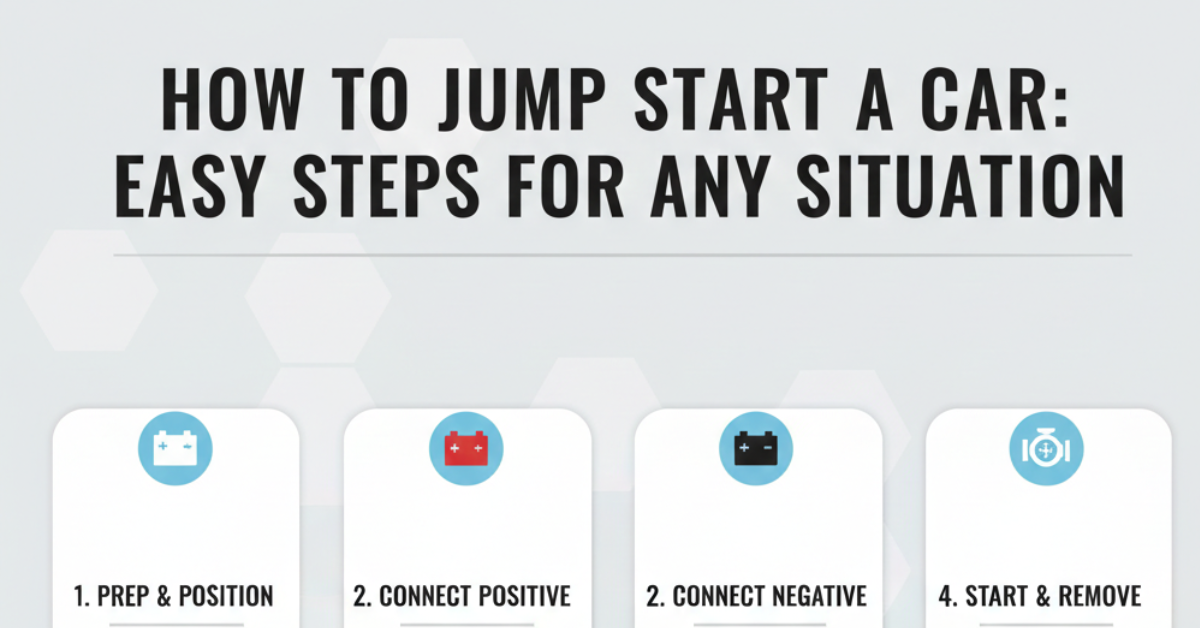
There’s nothing more frustrating than turning the key and hearing nothing but silence. A dead car battery can ruin your day, but knowing how to jump start a car can save you time, stress, and a costly tow. Whether you have jumper cables, a battery pack, or no help at all, this guide walks you through every step safely and confidently.
Why Car Batteries Die and How to Avoid It
Before diving into jump-starting, it helps to understand why batteries fail:
-
Leaving lights on: Interior or headlights draining power.
-
Extreme temperatures: Heat and cold affect battery performance.
-
Old age: Batteries usually last 3–5 years.
-
Parasitic drains: Electronics or faulty wiring consuming power when the car is off.
Understanding these factors can prevent future battery emergencies and keep your car ready to go.
How to Jump Start a Car With Cables
Jump-starting with cables is the most common method. Here’s how to do it safely:
You’ll need:
-
Jumper cables
-
Another vehicle with a working battery
Step-by-step:
-
Position the vehicles: Park the working car close enough for cables to reach but avoid touching cars.
-
Turn off both cars: Safety first.
-
Connect cables in the right order:
-
Red to dead battery (+)
-
Red to good battery (+)
-
Black to good battery (−)
-
Black to metal ground on the dead car
-
-
Start the working car: Let it run for a few minutes.
-
Try starting the dead car: If it starts, keep both engines running for 5–10 minutes to recharge the battery.
-
Disconnect cables carefully: Reverse the order of connection.
How to Jump Start a Car With a Battery Pack
If you don’t have a second car, a battery pack is your best friend. Portable jump starters are compact, easy to use, and lifesavers on the road.
Steps:
-
Turn off your vehicle.
-
Connect the battery pack clamps to the correct terminals (+ to +, − to −).
-
Power on the jump starter.
-
Start the car.
-
Disconnect the battery pack after the car is running.
How to Jump Start a Car By Yourself
Sometimes you’re alone, and another car isn’t around. Battery packs are ideal, but there’s a technique called push-starting for manual transmission vehicles:
-
Turn the ignition on.
-
Depress the clutch and put the car in second gear.
-
Get someone to push or roll the car down a slope.
-
Release the clutch quickly once moving.
This method won’t work on automatic cars but can be a lifesaver in emergencies.
How to Jump Start a Car Battery Without Another Car
Beyond battery packs and push-starts, you can try:
-
Trickle chargers: Slowly recharge your battery overnight.
-
Solar chargers: Small but effective for mild emergencies.
-
Roadside assistance: Always a reliable backup if all else fails.
FAQs
Q1: Can I jump start a car multiple times in one day?
A: Yes, but frequent jump-starts indicate a failing battery. Replace it if needed.
Q2: How long should I drive after jump-starting?
A: Drive at least 20–30 minutes to allow the alternator to recharge the battery.
Q3: Will cold weather affect jump starting?
A: Yes. Extremely cold temperatures can reduce battery efficiency, so extra patience and a battery pack may help.
Q4: Can I damage my car while jump-starting?
A: Incorrect connections or sparks can damage electronics. Follow the steps carefully.
Q5: Are all jump starters compatible with any car?
A: Most work for standard vehicles, but check voltage requirements for larger trucks or SUVs.
Conclusion
Knowing how to jump start a car is a practical skill every driver should master. Whether using jumper cables, a battery pack, or push-starting alone, safety and correct procedure are key. Keep your tools ready, understand the steps, and you’ll never be stranded by a dead battery again.