Seeing abnormal blood test results can be stressful, especially when the word cancer comes to mind. One question many people search online is: what level of eosinophils indicate cancer?
Eosinophils are a type of white blood cell involved in immune responses, allergies, and fighting parasites. While high eosinophil levels can sometimes be linked to certain cancers, the truth is more complex — and most cases are caused by non-cancerous conditions.
In this article, we’ll break down what eosinophils do, what counts as “high,” and when elevated eosinophils might require further medical evaluation.
What Are Eosinophils and Why Do They Matter?
Eosinophils are one of the five main types of white blood cells. Their main job is to help your body respond to:
-
Allergic reactions
-
Asthma
-
Parasitic infections
-
Inflammation
-
Certain immune system disorders
They’re measured in a routine complete blood count (CBC).
A small amount is normal — your body needs them. Problems arise when the count becomes unusually high.
Normal Eosinophil Range in Blood Tests
Before asking what level of eosinophils indicate cancer, you need to know the normal range.
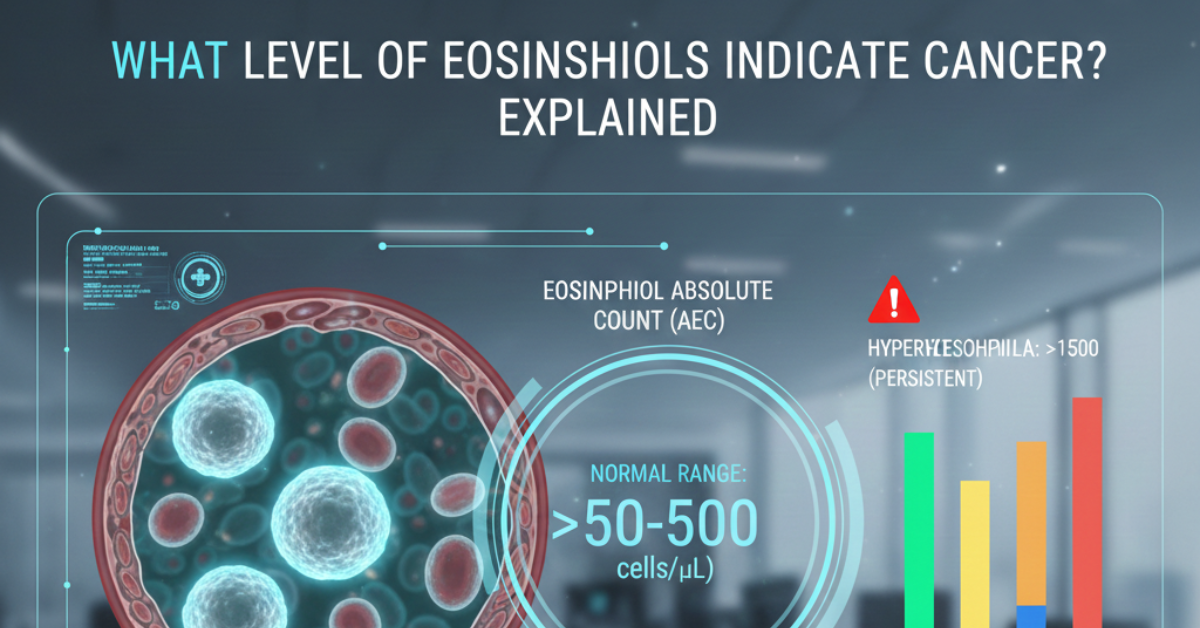
Most labs define normal eosinophil counts as:
-
0 to 500 cells per microliter (µL)
-
Or about 1–6% of total white blood cells
Anything above this is called eosinophilia.
What Level of Eosinophils Indicate Cancer?
Here’s the key truth:
There is no specific eosinophil level that automatically indicates cancer.
Cancer is not diagnosed based on eosinophil count alone.
However, very high eosinophil levels — especially when persistent — can sometimes be associated with certain malignancies.
Doctors become more concerned when eosinophils reach:
-
Over 1,500 cells/µL (moderate to severe eosinophilia)
-
Especially if it lasts for weeks or months
-
And if other symptoms are present
Severe Eosinophilia and Cancer Risk
Eosinophil levels are generally classified as:
-
Mild: 500–1,500 cells/µL
-
Moderate: 1,500–5,000 cells/µL
-
Severe: Above 5,000 cells/µL
Severe eosinophilia may prompt doctors to investigate serious causes, including rare blood cancers.
But again — cancer is only one possibility, not the most common one.
Cancers Most Commonly Linked to High Eosinophils
Certain cancers can trigger eosinophilia, especially those involving the blood or immune system.
These may include:
1. Hodgkin Lymphoma
Some patients develop elevated eosinophils due to immune signaling changes.
2. Leukemia (Especially Eosinophilic Leukemia)
A rare type of blood cancer directly involving eosinophils.
3. Certain Solid Tumors
Occasionally, cancers such as:
-
Lung cancer
-
Gastrointestinal cancers
-
Cervical cancer
may cause eosinophil elevation through inflammation.
More Common Causes of High Eosinophils (Not Cancer)
Here’s the part people need to hear clearly:
Most high eosinophil counts are NOT cancer.
The most frequent causes include:
-
Allergies (hay fever, eczema)
-
Asthma
-
Parasitic infections
-
Drug reactions
-
Autoimmune diseases
-
Skin disorders
Doctors usually rule these out first before even considering cancer.
Symptoms That Matter More Than the Number
A lab value alone doesn’t tell the full story. Doctors worry more when high eosinophils come with symptoms like:
-
Unexplained weight loss
-
Night sweats
-
Persistent fever
-
Swollen lymph nodes
-
Fatigue that doesn’t improve
-
Abnormal scans or other blood abnormalities
If you have none of these, cancer is far less likely.
How Doctors Evaluate High Eosinophils
If eosinophils stay elevated, doctors may order:
-
Repeat CBC tests
-
Allergy testing
-
Stool tests for parasites
-
Imaging (if symptoms exist)
-
Bone marrow biopsy (only in rare serious cases)
The goal is to find the root cause, not jump straight to worst-case scenarios.
When Should You Be Concerned?
You should speak to a doctor if:
-
Eosinophils are consistently above 1,500 cells/µL
-
The count keeps rising
-
You have unexplained symptoms
-
Other blood values are abnormal
One abnormal test isn’t a diagnosis — it’s a clue.
FAQs: What Level of Eosinophils Indicate Cancer?
Can eosinophils alone diagnose cancer?
No. Eosinophils are not a cancer diagnostic marker by themselves.
Is 700 eosinophils dangerous?
Not usually. That’s mild eosinophilia and is commonly caused by allergies or asthma.
What eosinophil count is considered very high?
Counts above 1,500 cells/µL, especially persistent, are considered significant.
Do all cancer patients have high eosinophils?
No. Most cancers do not affect eosinophil levels at all.
What should I do if my eosinophils are high?
Follow up with your doctor for repeat testing and evaluation of common causes first.
Conclusion
So, what level of eosinophils indicate cancer? The honest answer is that no single number automatically means cancer. While very high and persistent eosinophil counts (especially above 1,500 cells/µL) may require deeper investigation, most cases are caused by allergies, asthma, infections, or inflammation.The smartest next step is simple: don’t panic — get proper medical follow-up, look at the full clinical picture, and rule out common causes first.