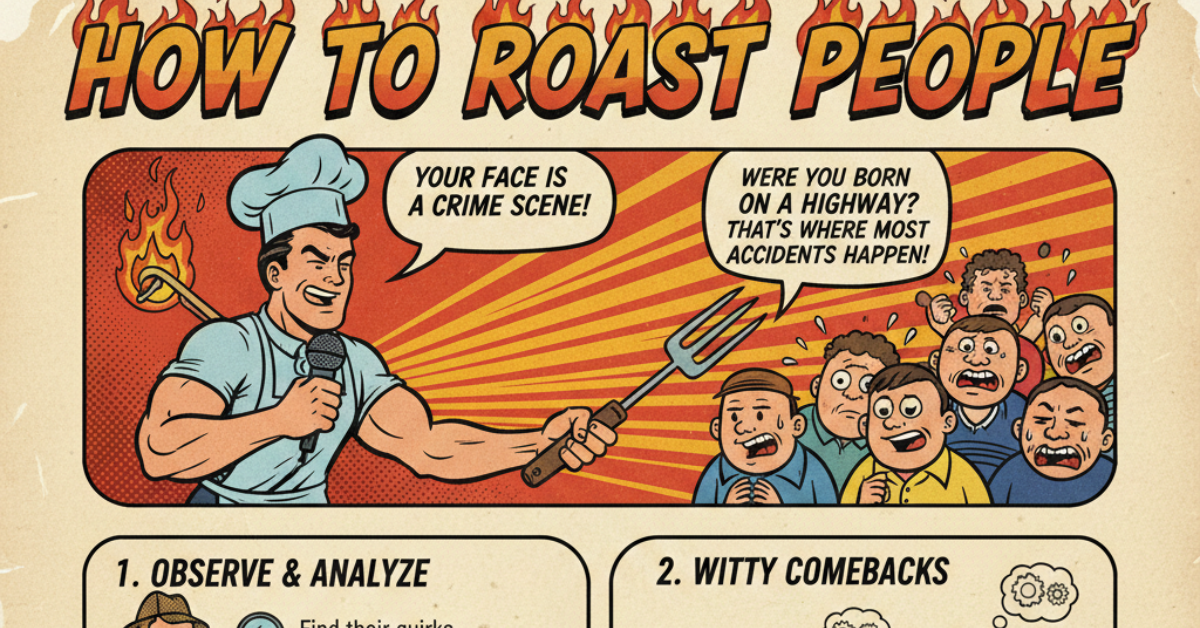
Roasting isn’t just about throwing shade—it’s an art. Knowing how to roast people effectively means delivering clever, funny, and memorable comebacks without being mean-spirited. Whether it’s for a friendly banter with friends, a comedy stage, or responding when someone tries to roast you, learning the ropes can make you sharp, witty, and surprisingly charming.
In this guide, we’ll explore techniques, tips, and strategies for roasting people and even how to roast people back when the joke is on you.
What Does It Mean to Roast Someone?
A roast is a humorous critique or playful insult. Think of it as friendly fire—meant to amuse rather than hurt. While roasting can be entertaining, it’s crucial to strike the right balance between funny and offensive.
Key Elements of a Good Roast
-
Timing: Deliver the roast when it lands best, usually after the other person speaks.
-
Wit: Cleverness beats cruelty. Puns, wordplay, and observation work wonders.
-
Relatability: Roasts are funnier when they touch on something true but harmless.
-
Respect: Avoid personal or sensitive topics that can cause real harm.
How to Roast People: Tips and Techniques
1. Observe Before You Roast
Take note of your friend’s quirks, habits, or funny traits. The more specific and lighthearted your roast, the better it lands.
2. Use Wordplay
Puns, rhymes, or clever metaphors make your roast memorable. Example: “You have the memory of a goldfish… but at least you’re cute.”
3. Keep It Light
Aim for playful teasing rather than hurtful attacks. Focus on habits, style choices, or harmless quirks rather than deep insecurities.
4. Practice Timing
Roasts hit hardest when unexpected. Short, punchy lines are often more effective than long-winded explanations.
5. Know Your Audience
What works with friends may not work with colleagues. Gauge the vibe and adjust accordingly.
How to Roast People Back: Defending Yourself With Humor
Sometimes, you’re on the receiving end of a roast. Learning how to roast people back can turn the tables without escalating tension.
Quick Tips for Roasting Back
-
Stay Calm: Don’t overreact. Humor works best when relaxed.
-
Mirror Their Style: Use their joke format for a clever comeback.
-
Self-Deprecate First: A quick joke about yourself softens the blow and makes your response funnier.
-
Use Facts Wisely: Point out an amusing truth without being mean.
Example:
Friend: “You’re late as usual.”
You: “I like to make an entrance—fashionably late is a lifestyle choice.”
Common Mistakes to Avoid When Roasting
-
Attacking deeply personal topics
-
Being too aggressive or harsh
-
Overexplaining your joke
-
Targeting someone who isn’t in on the humor
Remember, the goal is laughter, not hurt feelings.
Fun Ideas for Roasts
-
Friendly nicknames: Highlight funny traits in a playful way
-
Pop culture references: Compare someone to a silly celebrity moment
-
Exaggeration: Amplify a harmless habit for comedic effect
-
Sarcastic compliments: “Wow, you’re so organized… in your dreams!”
FAQs About Roasting
Can anyone learn how to roast people?
Absolutely! Roasting is a skill built on observation, timing, and humor. Anyone can improve with practice.
How do I know if a roast is too far?
If it attacks personal trauma, appearance, or sensitive topics, it’s too far. Keep it lighthearted.
Can roasting work in professional settings?
Only in very casual, friendly environments. Avoid roasting colleagues or bosses unless you’re certain humor is welcome.
How do I respond to a mean roast?
Stay calm, use a clever comeback, or laugh it off. Turning it into a playful exchange is usually best.
Conclusion: Master the Art Without Crossing the Line
Learning how to roast people and how to roast people back is about wit, timing, and respect. Keep it playful, avoid sensitive topics, and use clever humor to make your roasts memorable. With practice, you can turn everyday banter into a fun, social skill that keeps everyone laughing—including you.